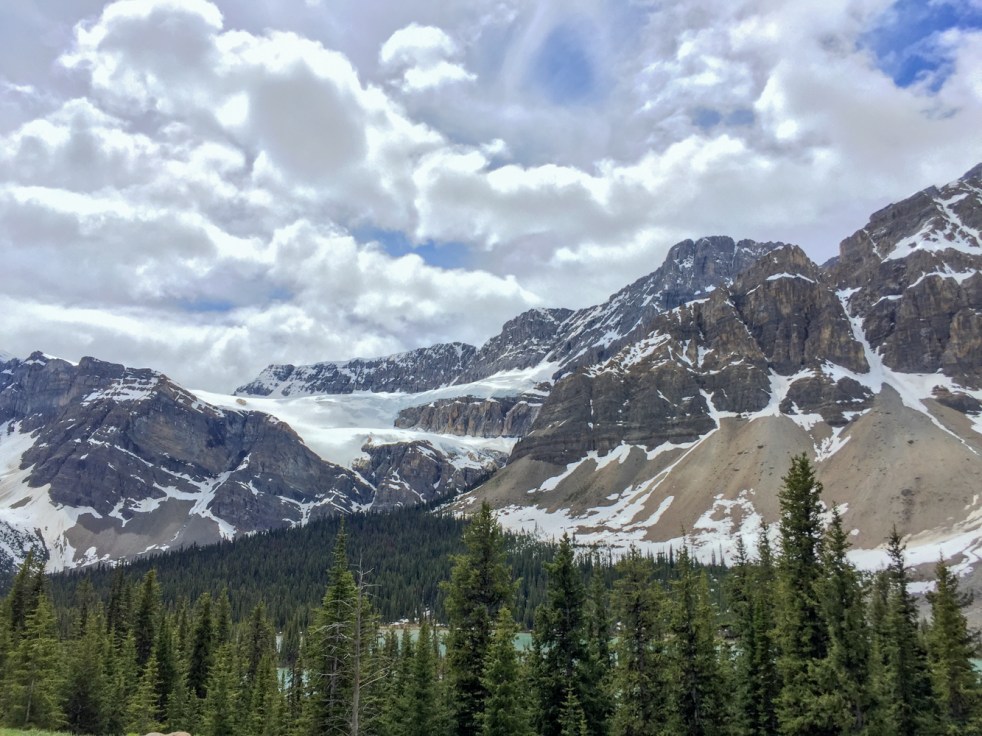
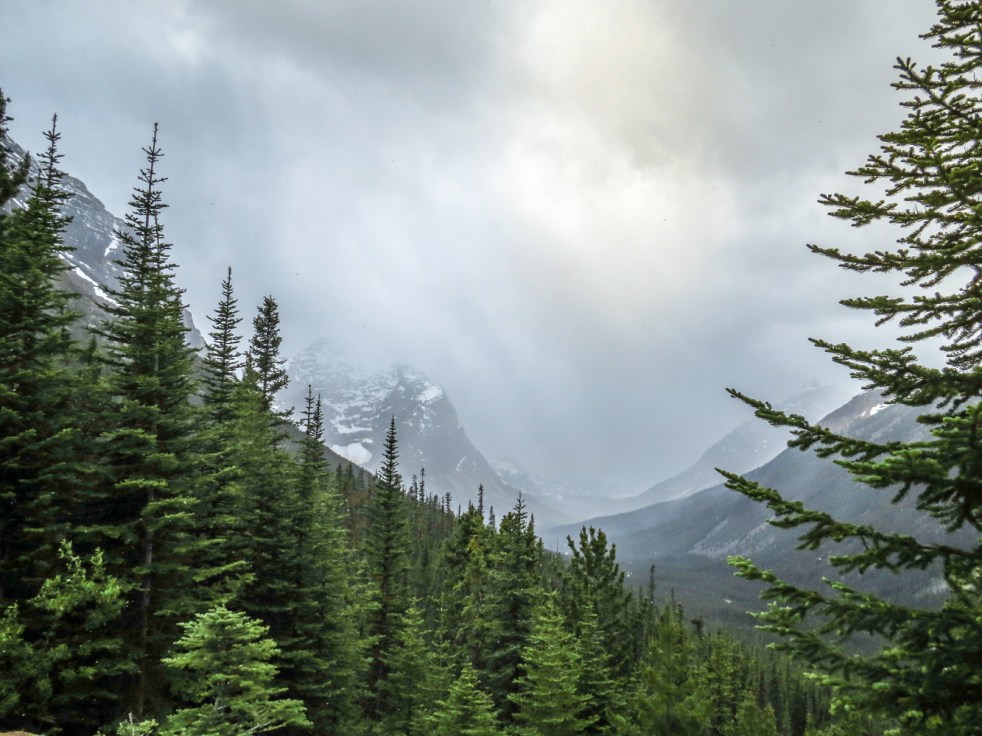
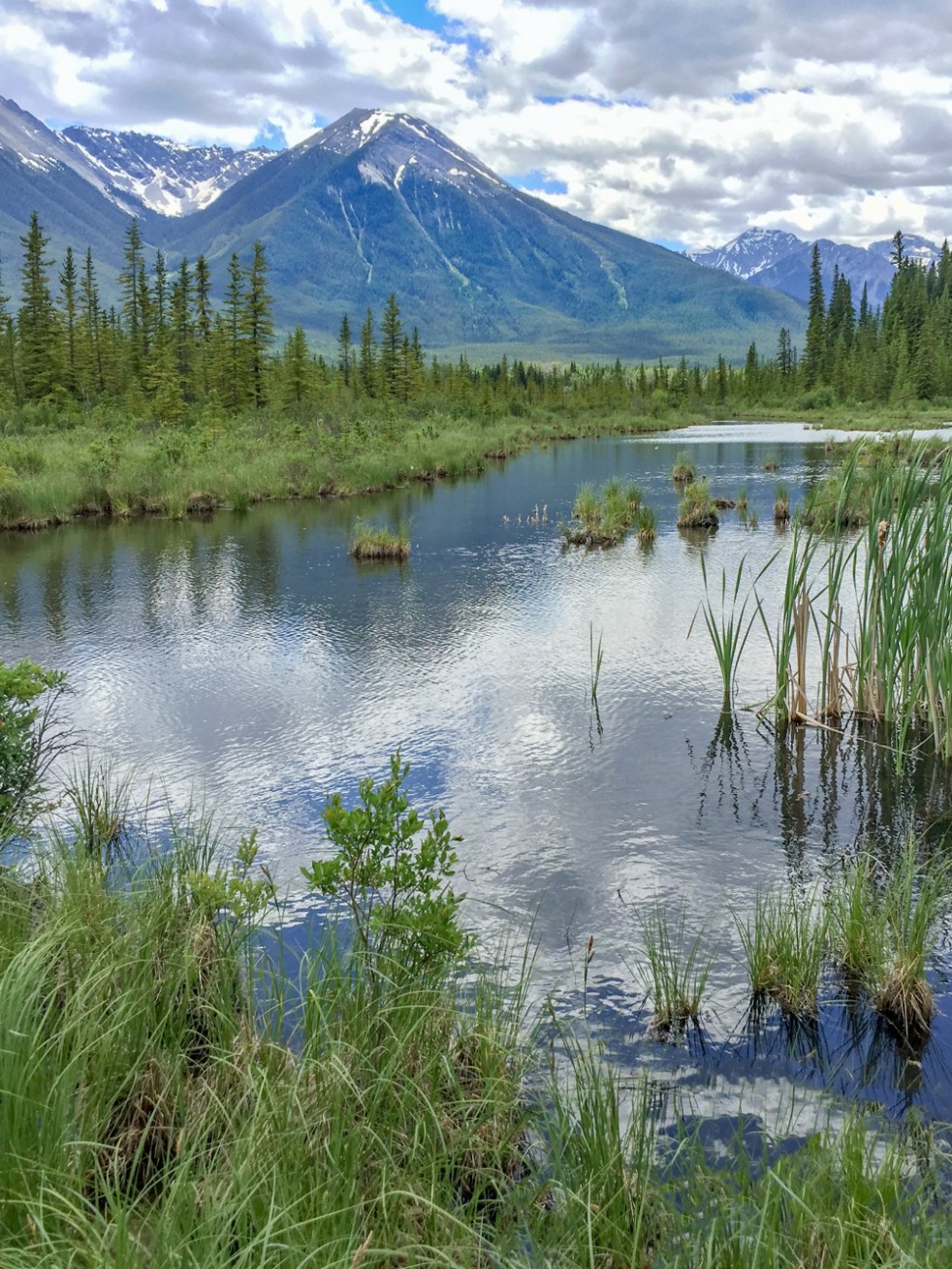
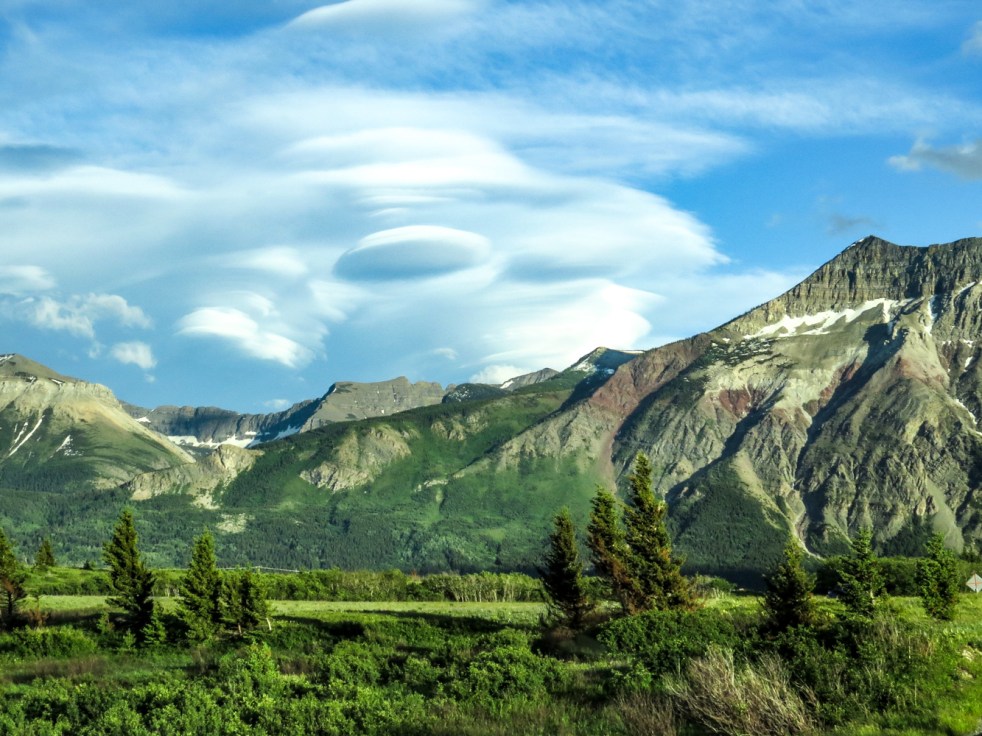
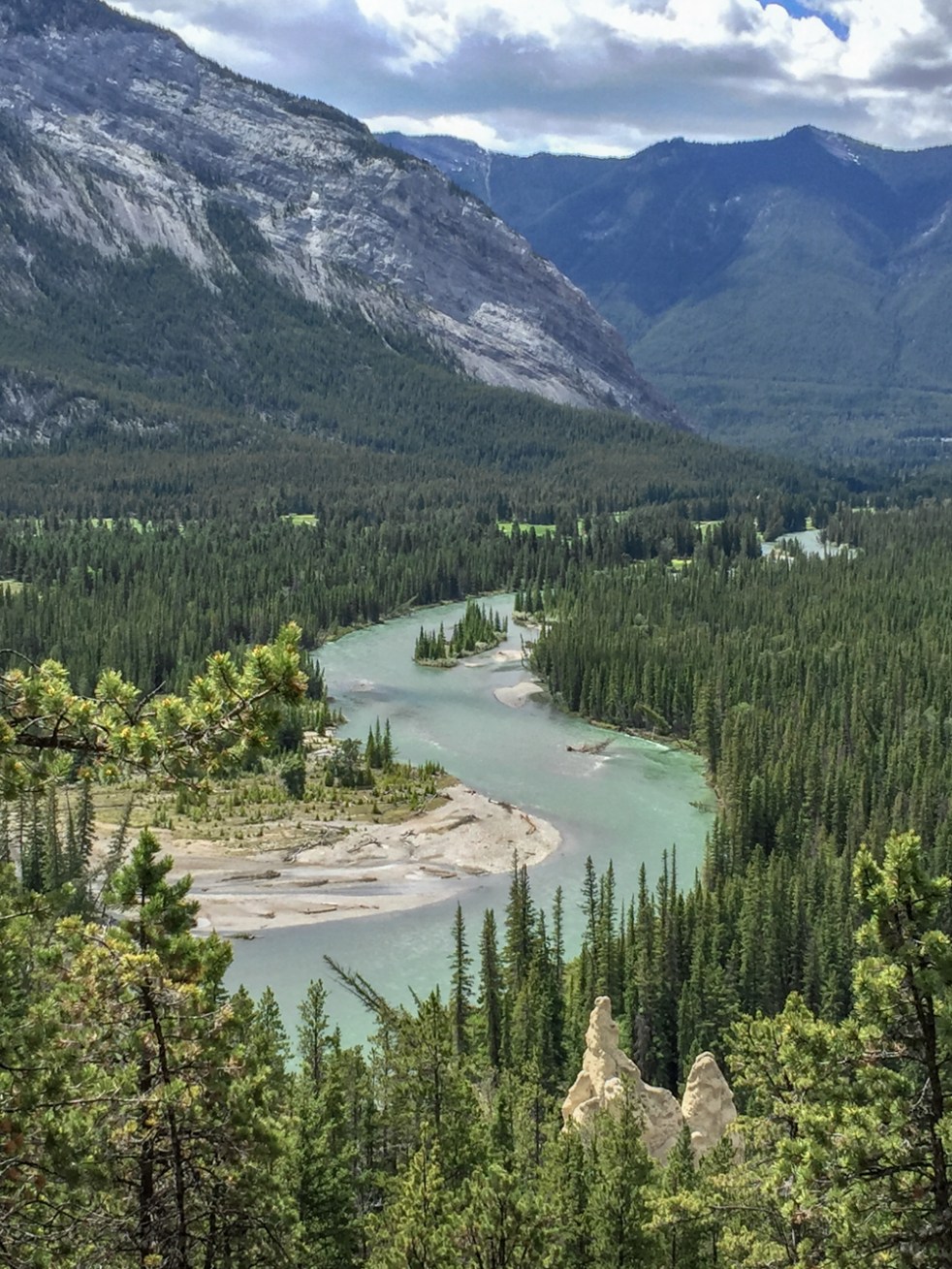
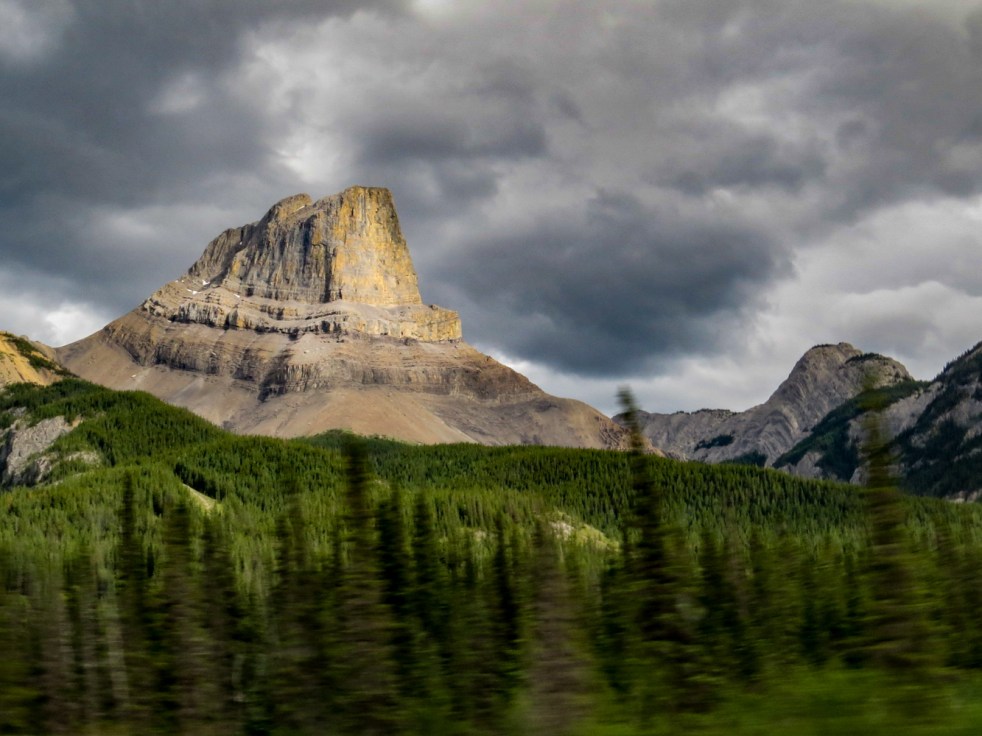
I started this Canadian Rockies trip blog with mountains, and I’m going to end it (almost…one more post after this) with skies. I love busy skies, and was particularly taken by how clouds often seemed to mold their shapes to the landscape they were enhancing. Sometimes the sun had to fight for space through their density, sometimes their effect was more dramatic when looking down, and one evening an alien spaceship appeared to evaluate the topography and before deciding not to invade its beauty.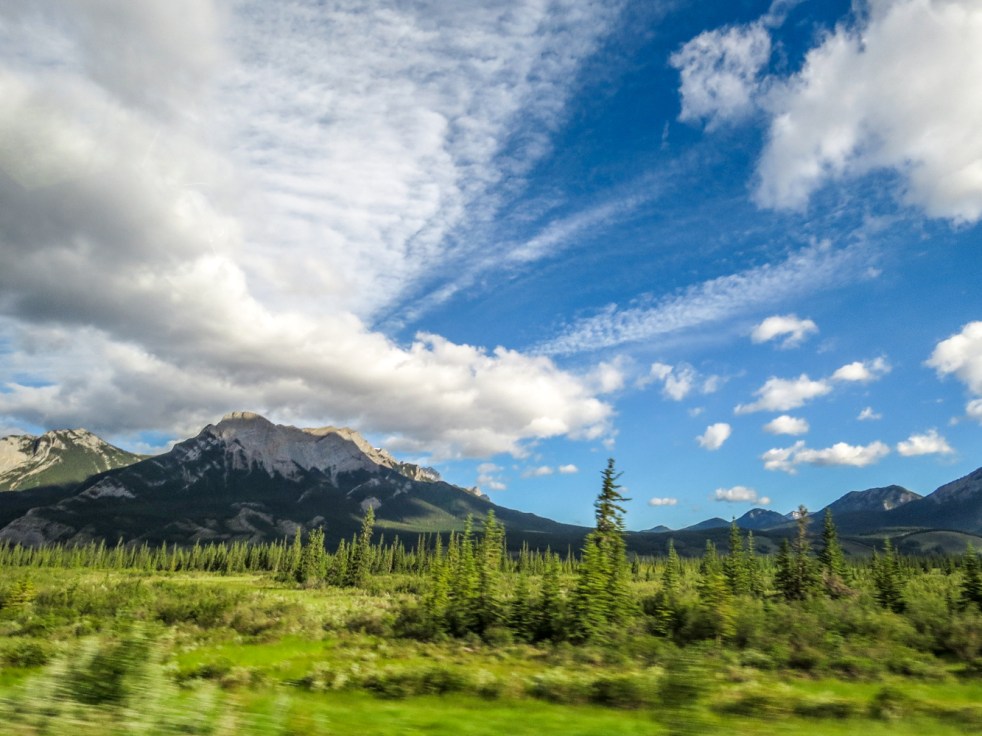


Tag: Travel
Color Me Red and Blue
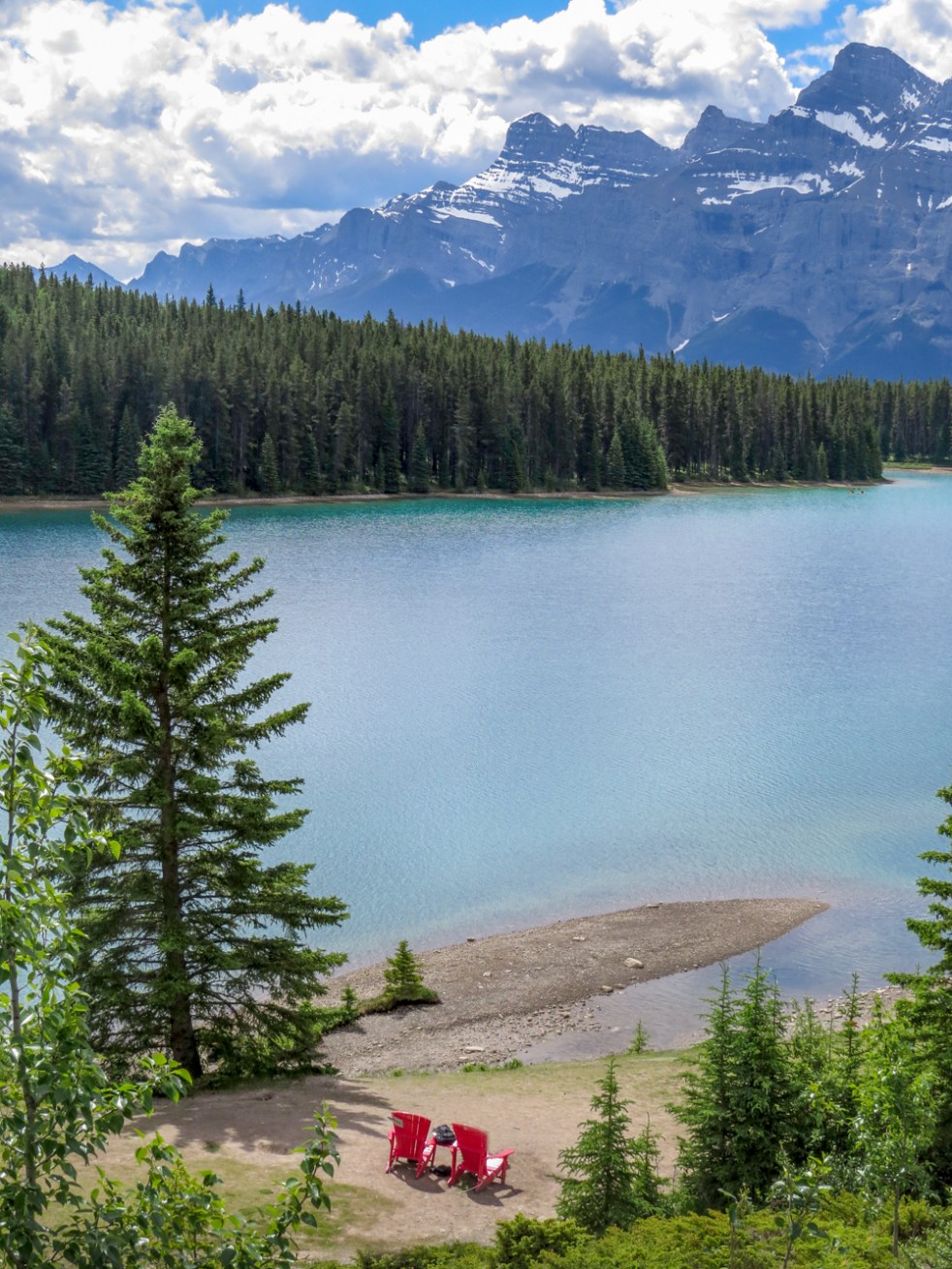
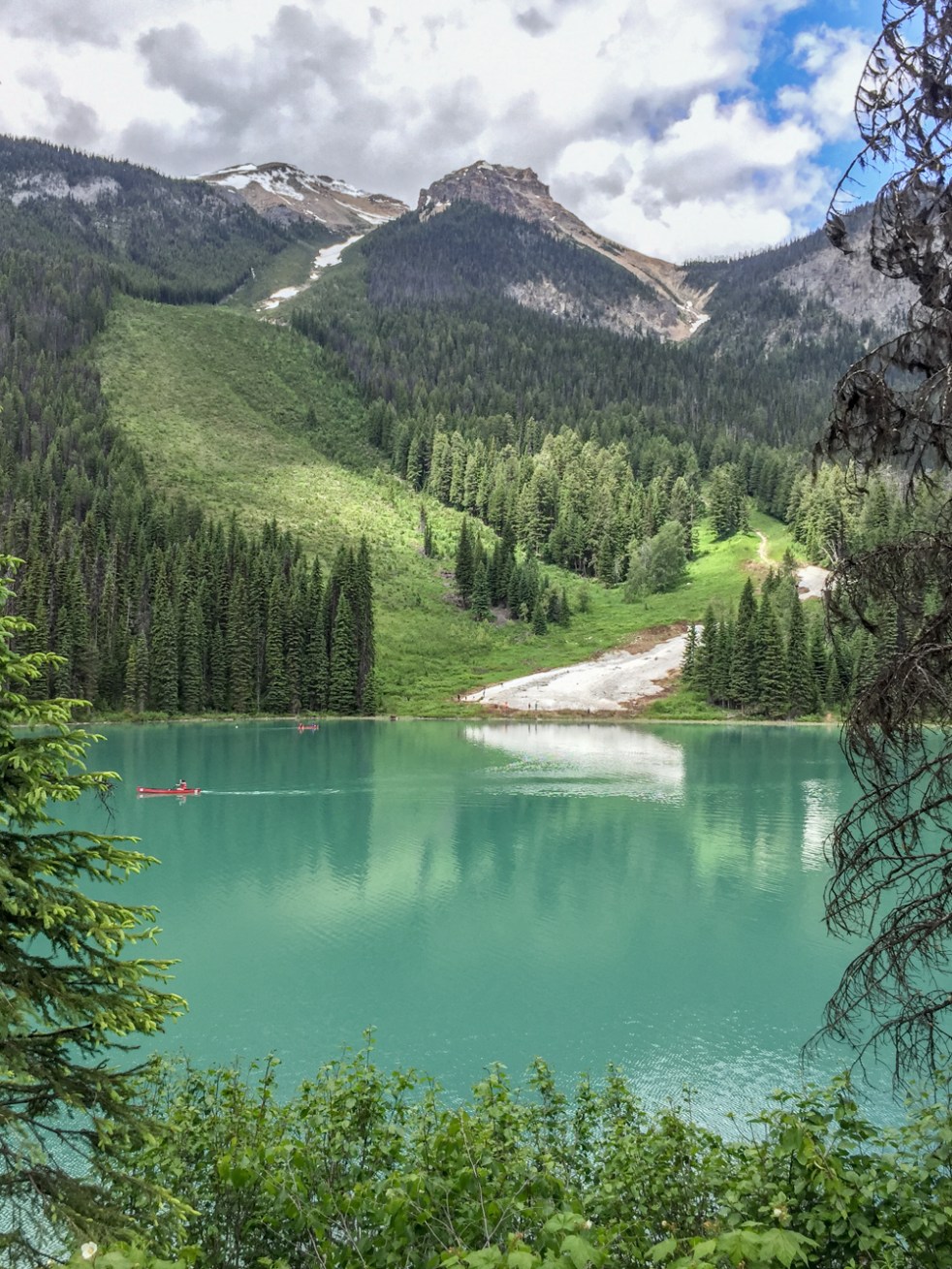
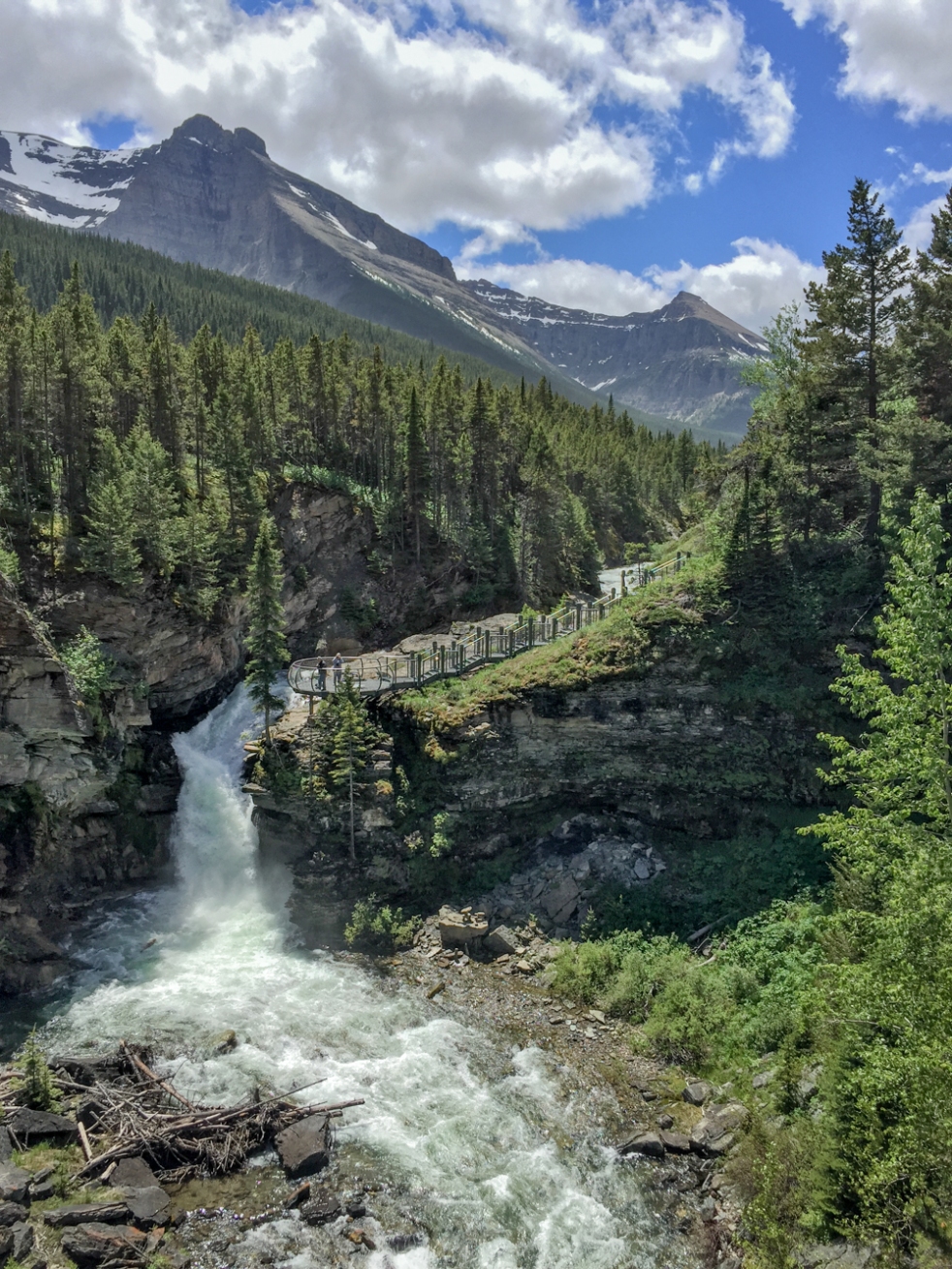
Remember the red Adirondack chairs I loved when we saw them lakeside in Waterton? They showed up again beside the blue water of Two Jack Lake, near Banff. And the vivid shades of blue and turquoise found in Peyto Lake, Moraine Lake, Lake Minnewanka and Emerald Lake all rival Lake Louise, our first sight of the iridescence of powdered limestone and glacier sediment that colors the waters. No matter where we went in the Canadian Rockies, the rivers, waterfalls and lakes were beyond stunning; they were literally awesome.




Jasper Adventures
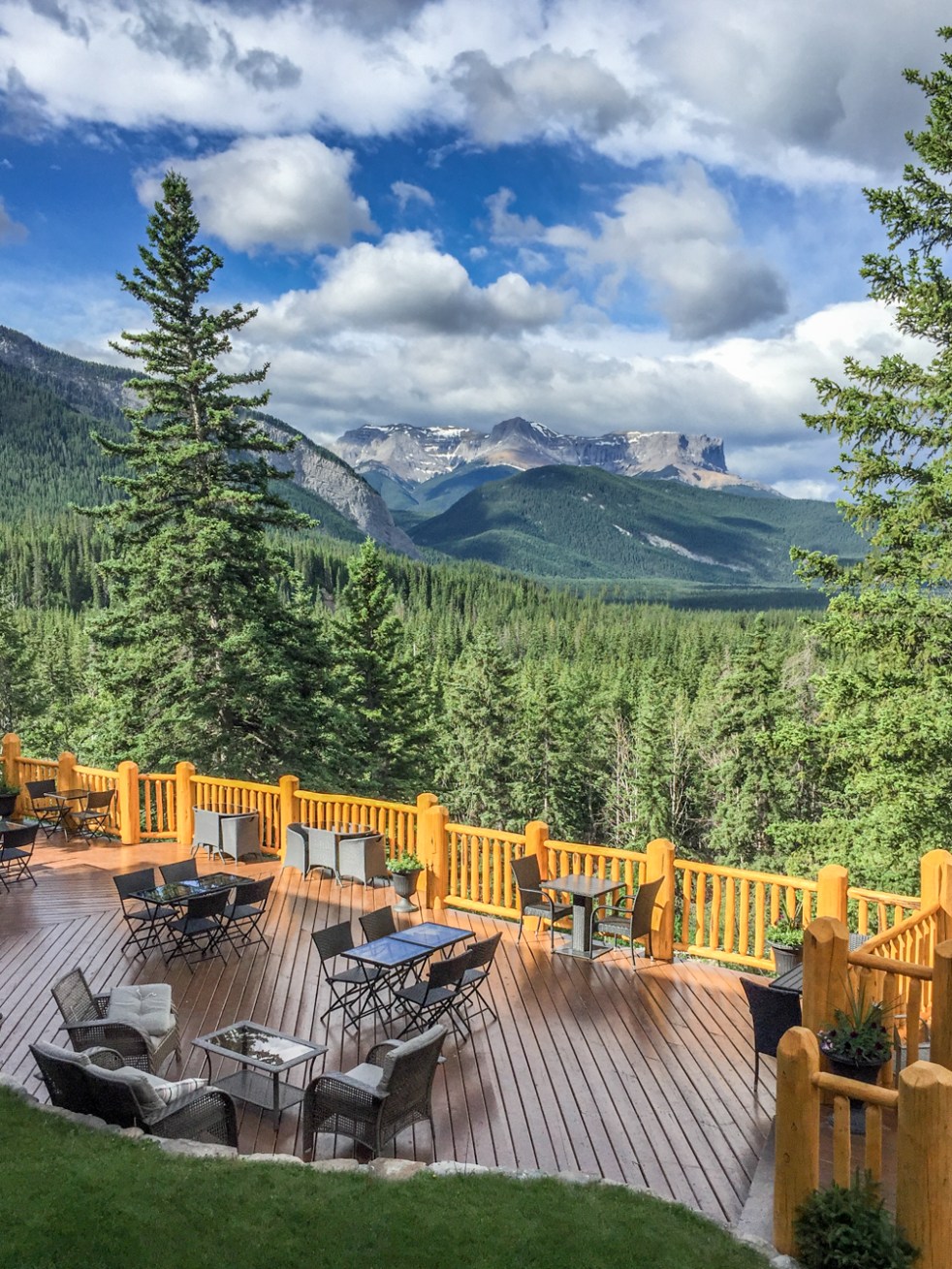
Our few days in Jasper National Park may have been the most fun. It was the furthest north we traveled in the Canadian Rockies, with long daylight hours to fill, in all weather conditions. When a day begins with coffee on a sunny deck you never want to leave, moves on to wet misty woods with gigantic waterfalls that crash through deep gorges, and ends climbing a mountain in a snowstorm, it’s a satisfying experience.
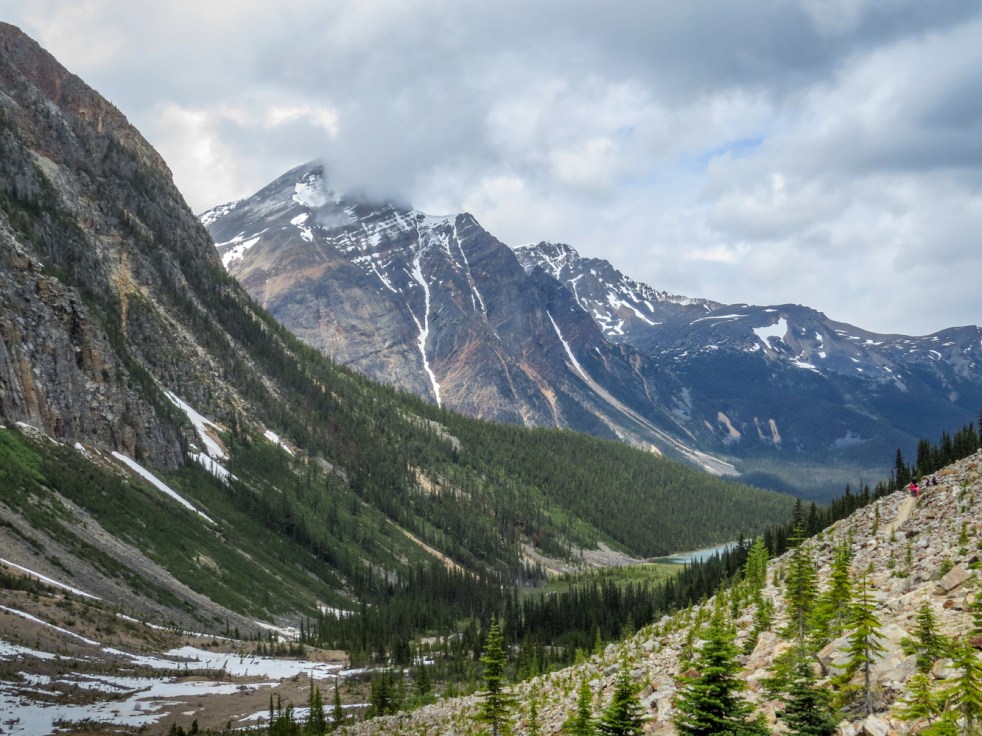
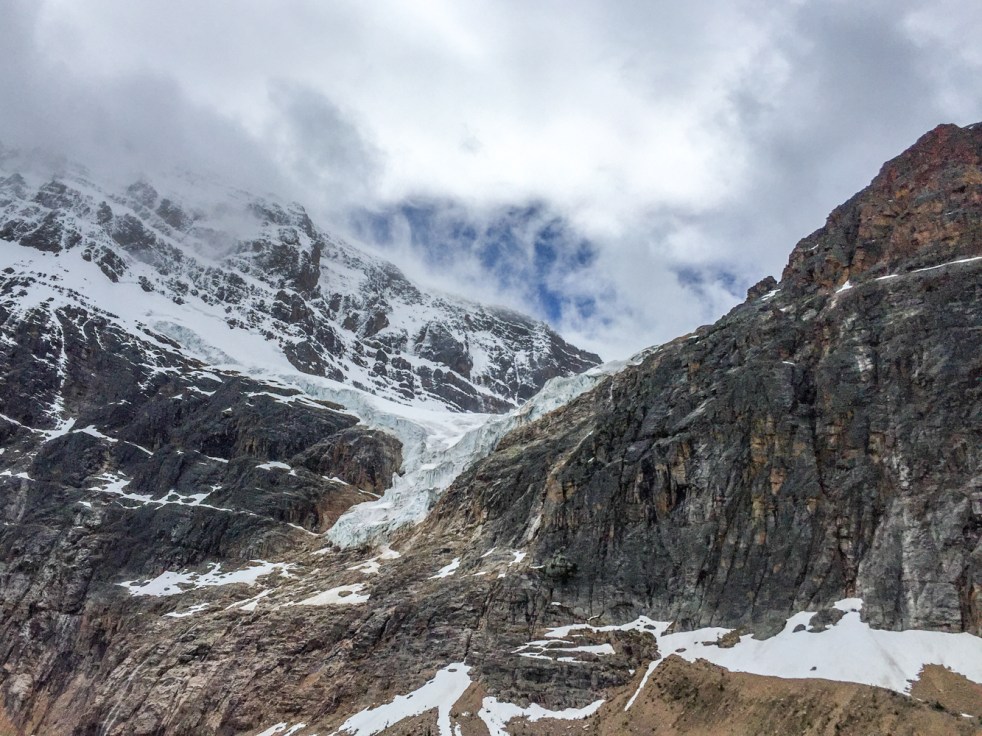
The Path of the Glacier Trail at Mount Edith Cavell seemed daunting (you may be able to see a climber on the path, a tiny red dot in the middle right side of the first mountain photo), and the snow and wind didn’t encourage us much. But it was worth reaching the viewing deck to see the Angel Glacier up close.





North to Jasper
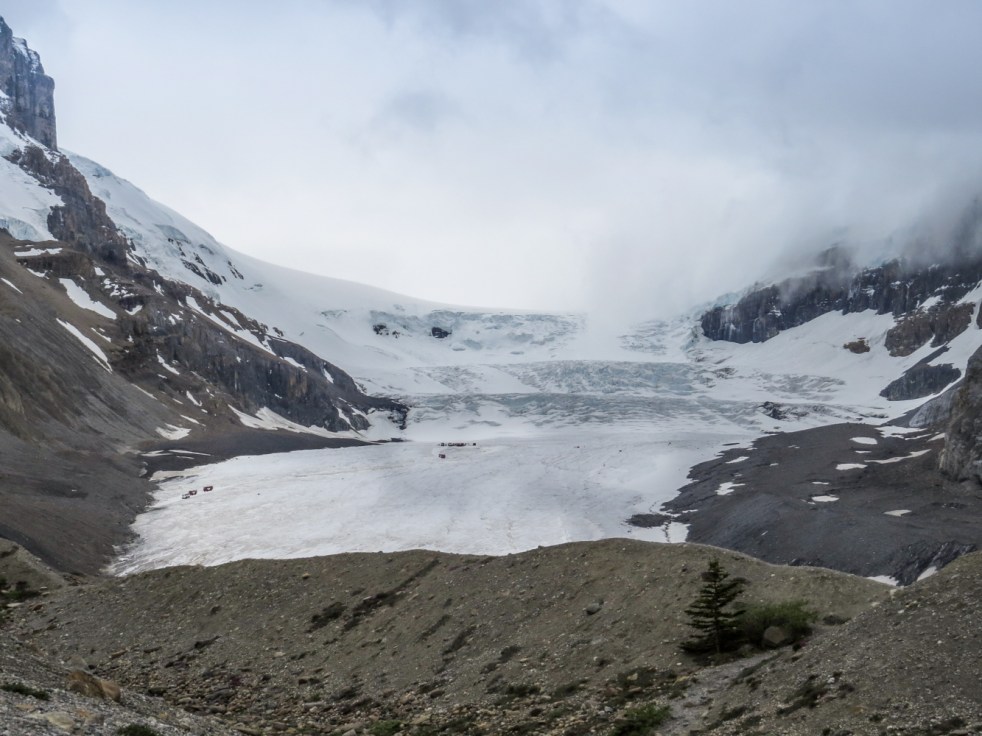
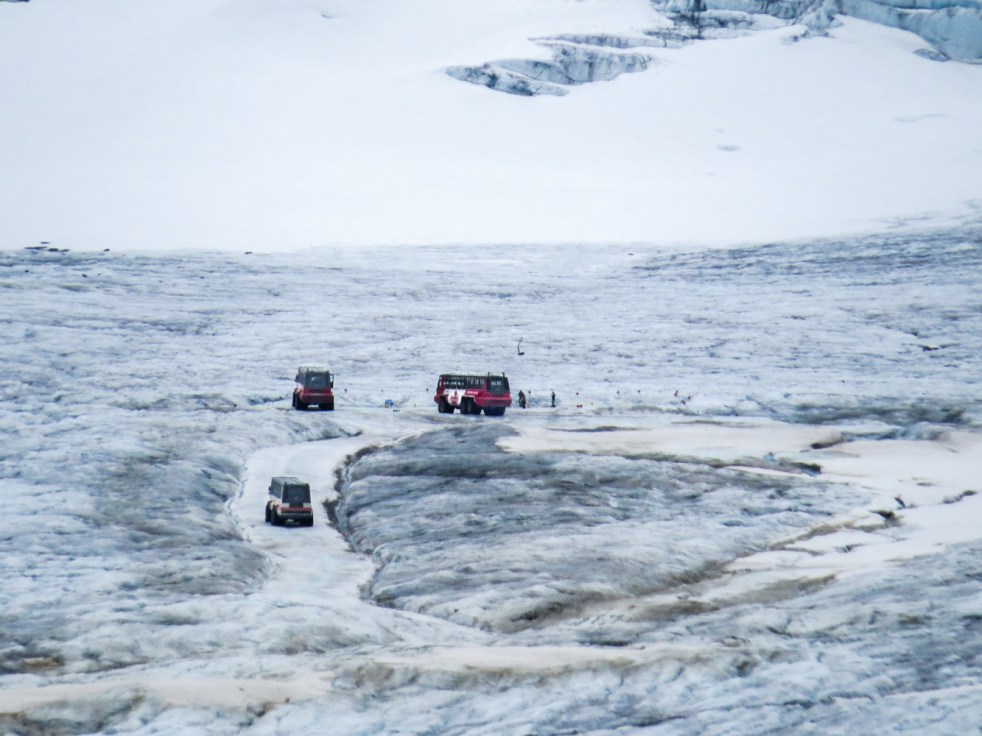
The drive from Banff National Park to the town of Jasper in Jasper National Park can be done in less than four hours, but not if you intend to appreciate the drama available along the way. First up is a glimpse of the Columbia Icefield, the largest in North America. The Athabasca Glacier, one of eight on the Icefield, is visible from the road, as are tiny ant-like dots on it that are actually gigantic snow busses taking people out to walk on the glacier. The size and scale of this glacier is hard to grasp without benefit of the familiar perspective of cars, which you may be able to see in the first photo.
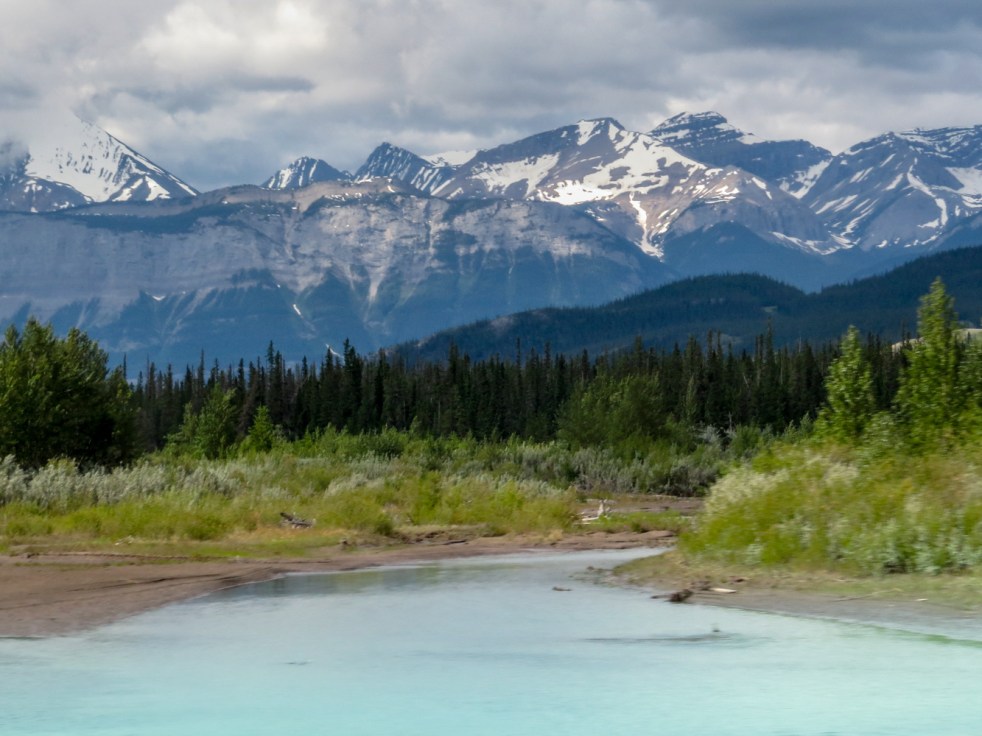
We had to stop often along the route north to marvel at the colors and varieties of landscapes presented by Mother Nature, but it didn’t matter how late we arrived at our hotel and dinner location; it was light nearly to midnight.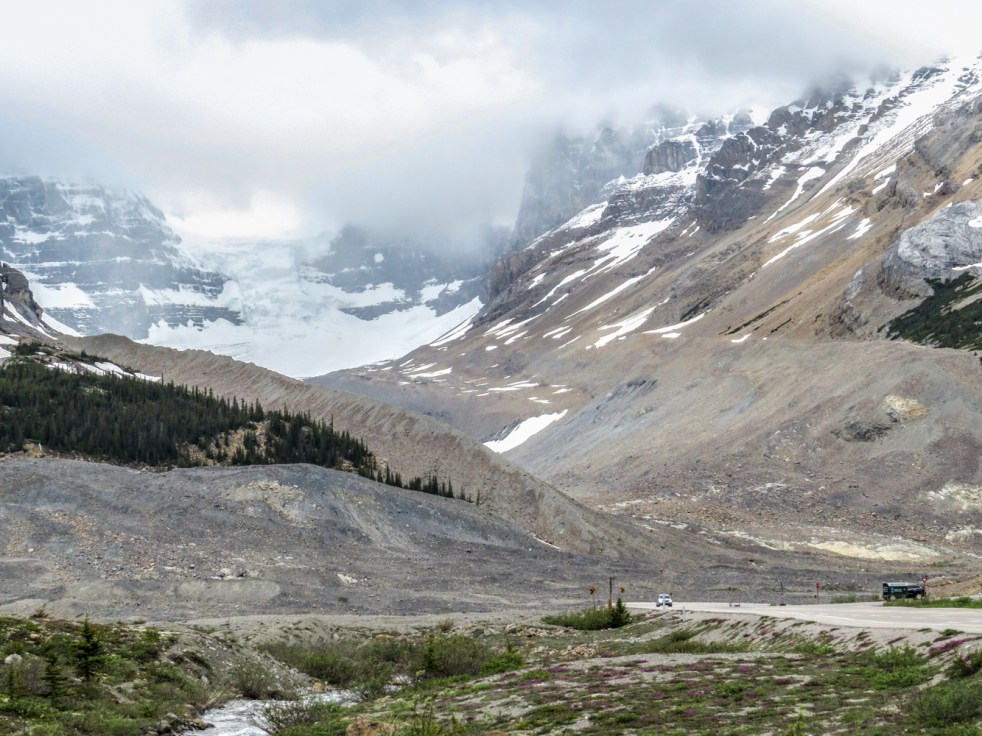



More Bears
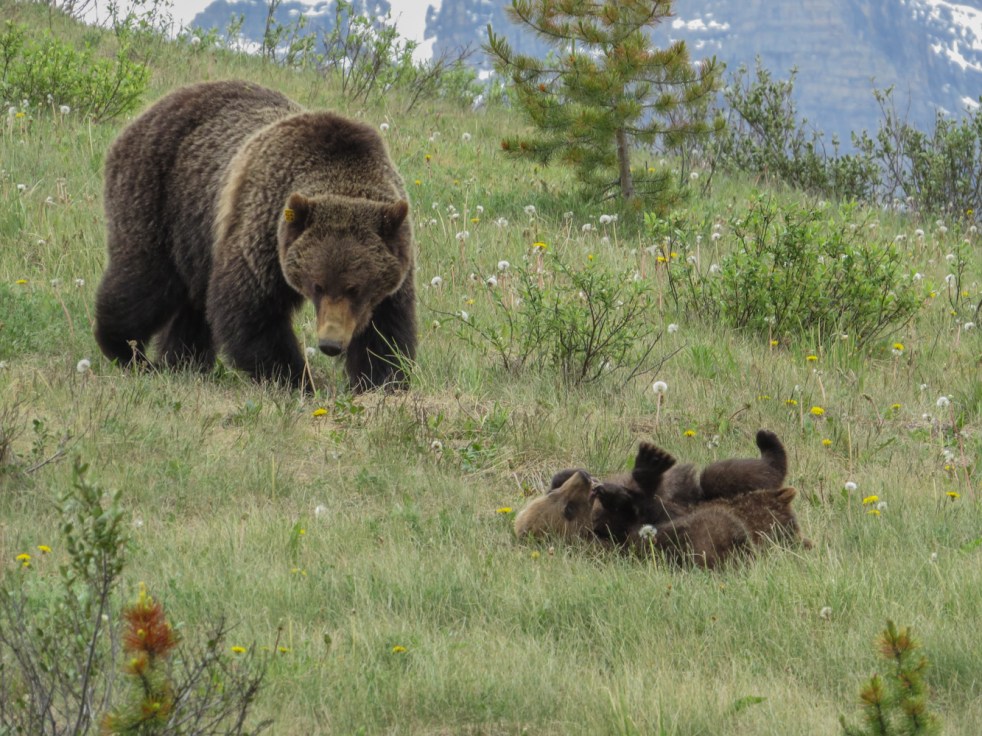
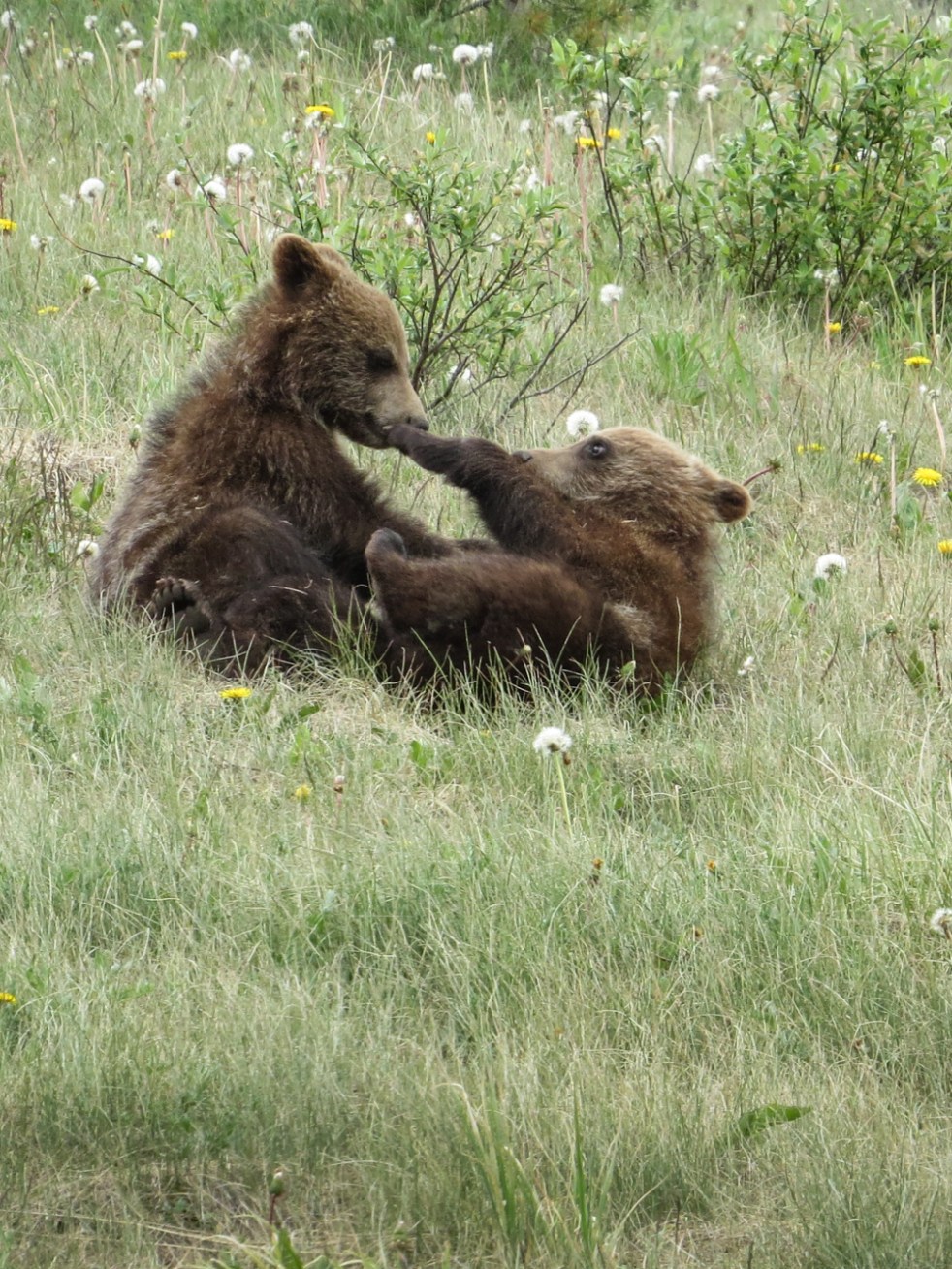
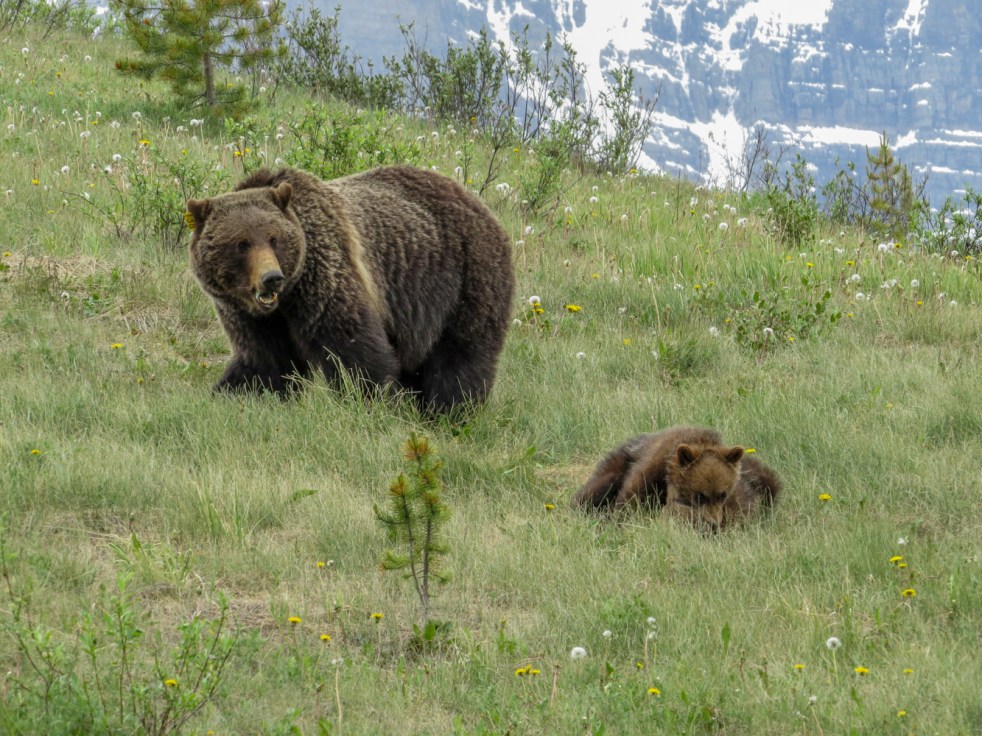
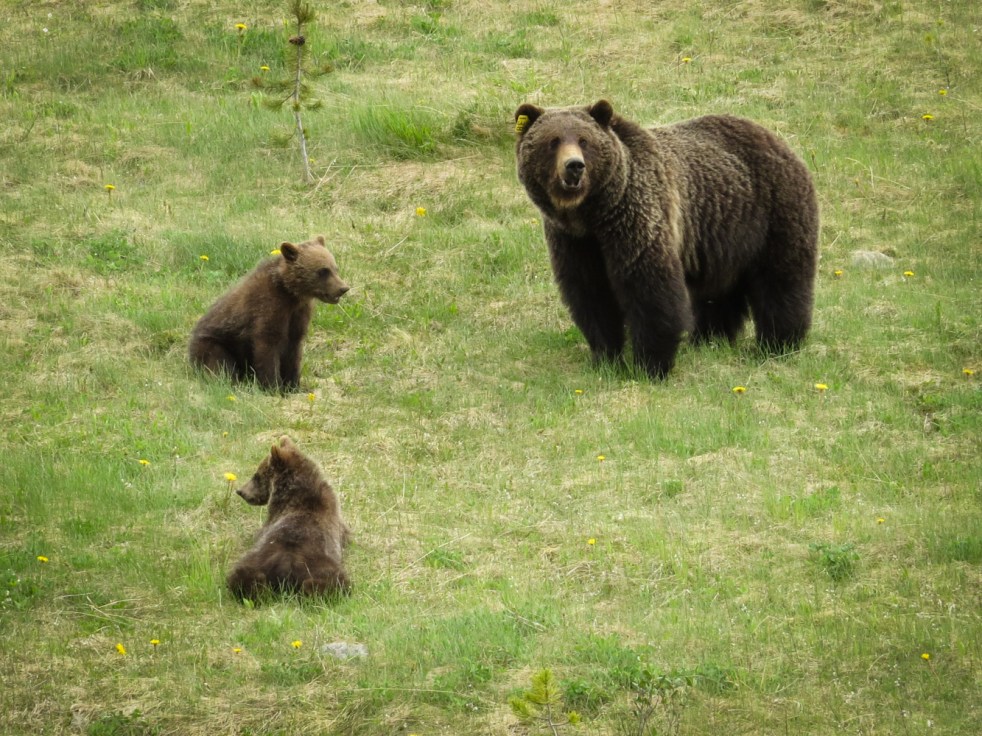
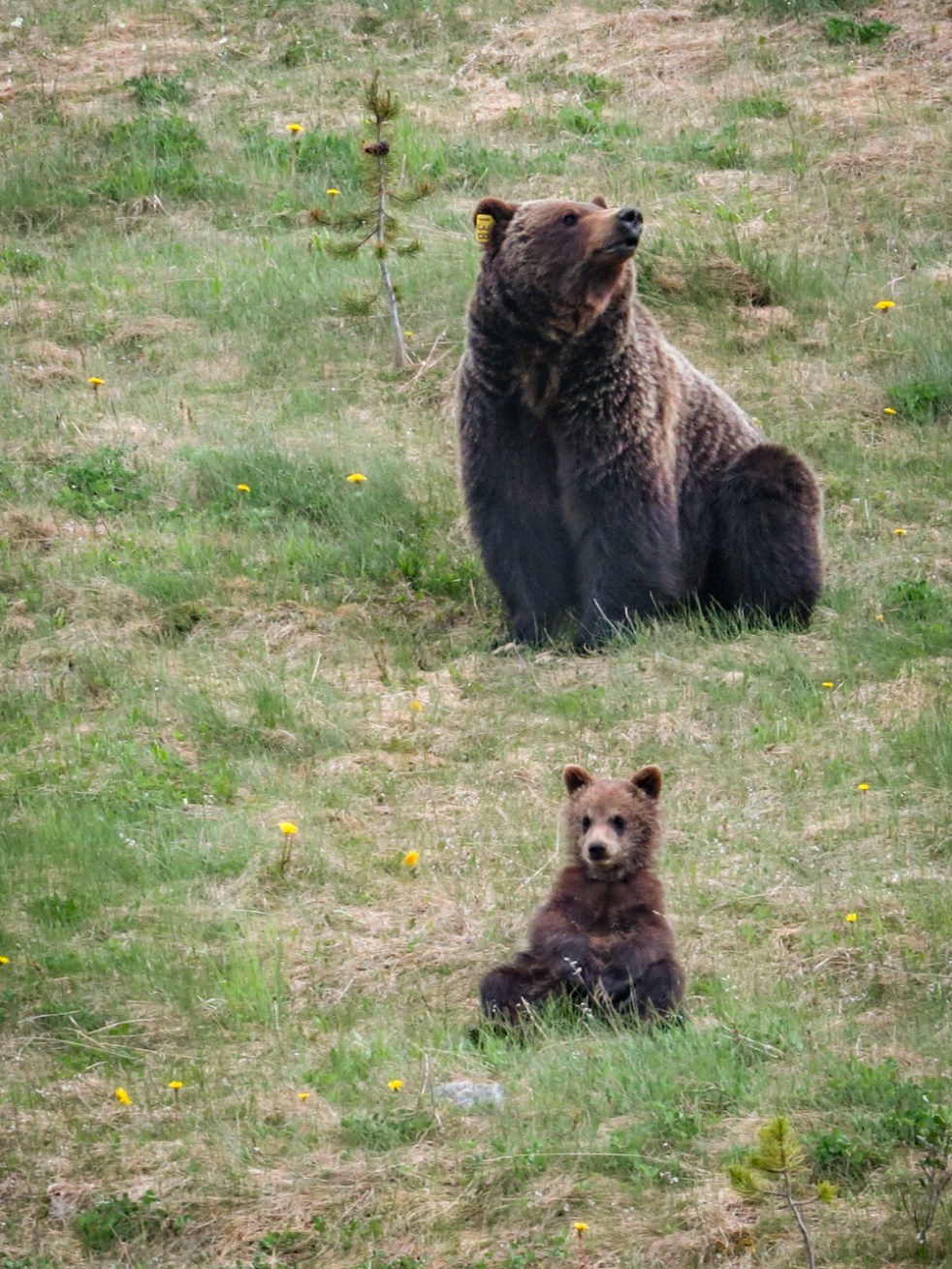
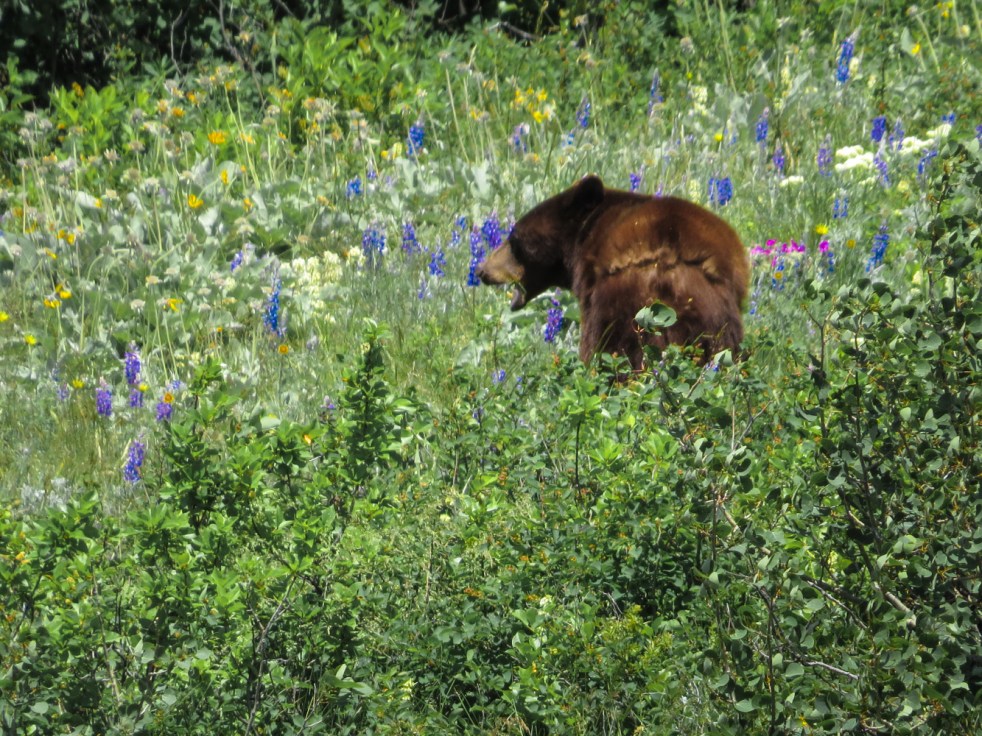
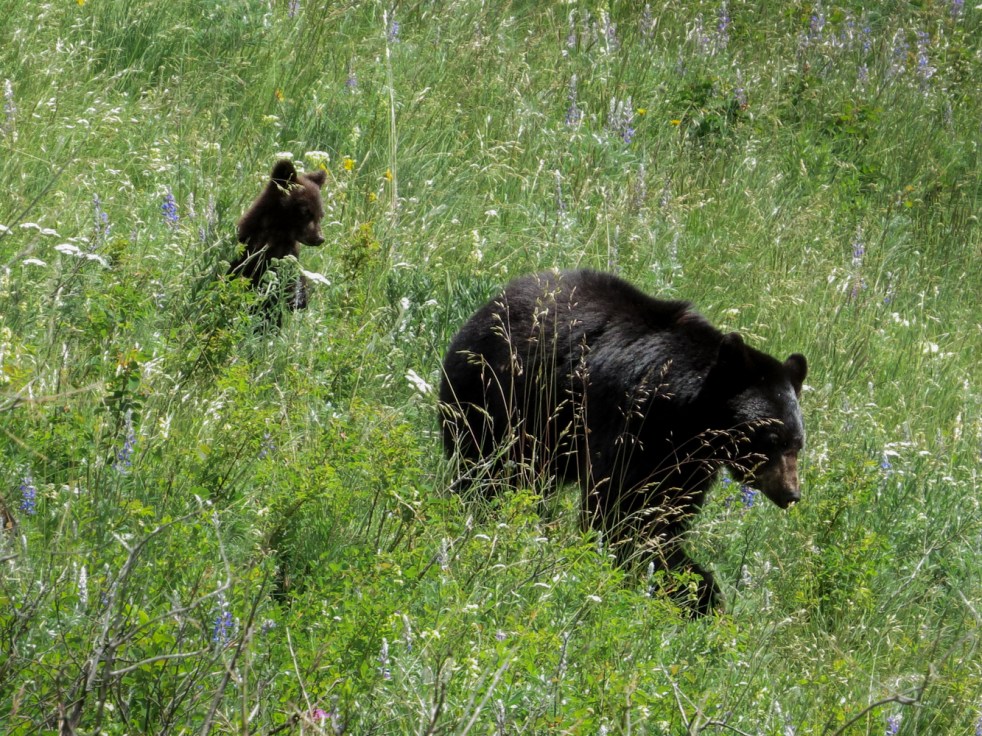
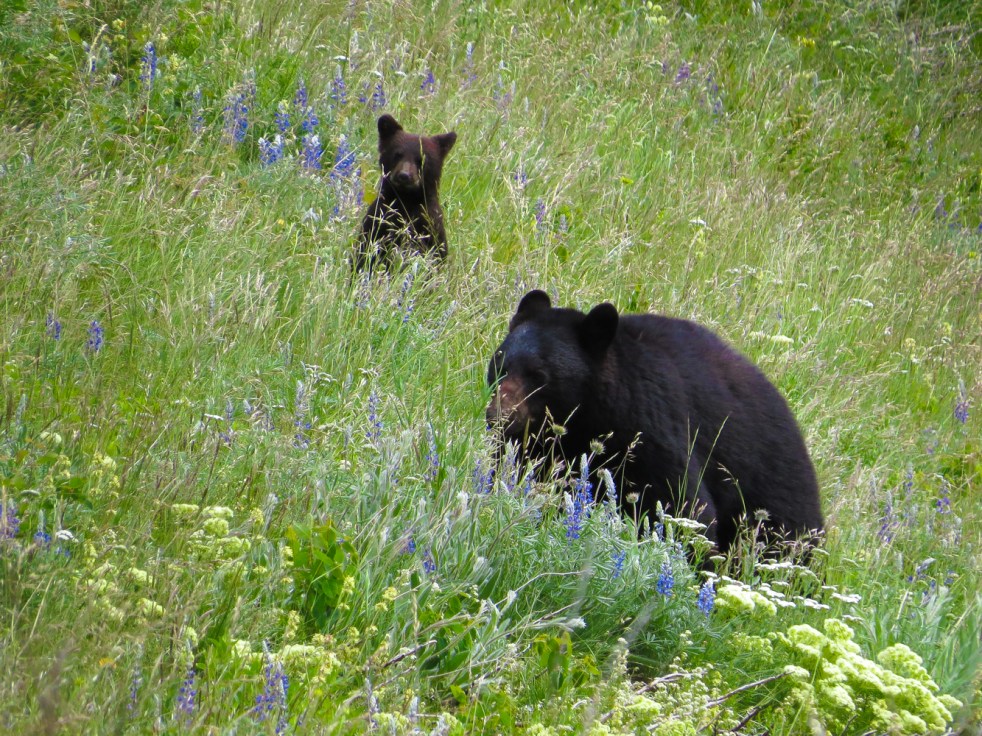
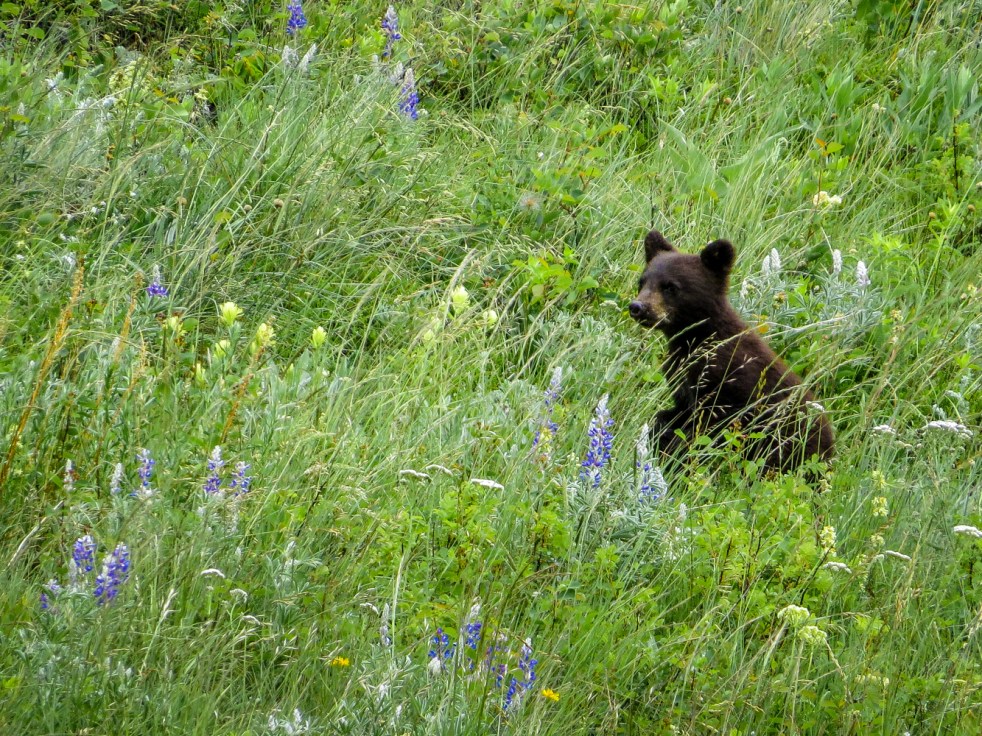
Yep. So close to the road leaving Banff that Park Rangers were using bullhorns to get gawkers (including us) back into our cars. No fences or culverts for protection, but happily a mom who seemed crankier about the behavior of her rambunctious cubs than their audience. Had she changed her mind, she could have reached us in seconds, regardless of my telephoto lens.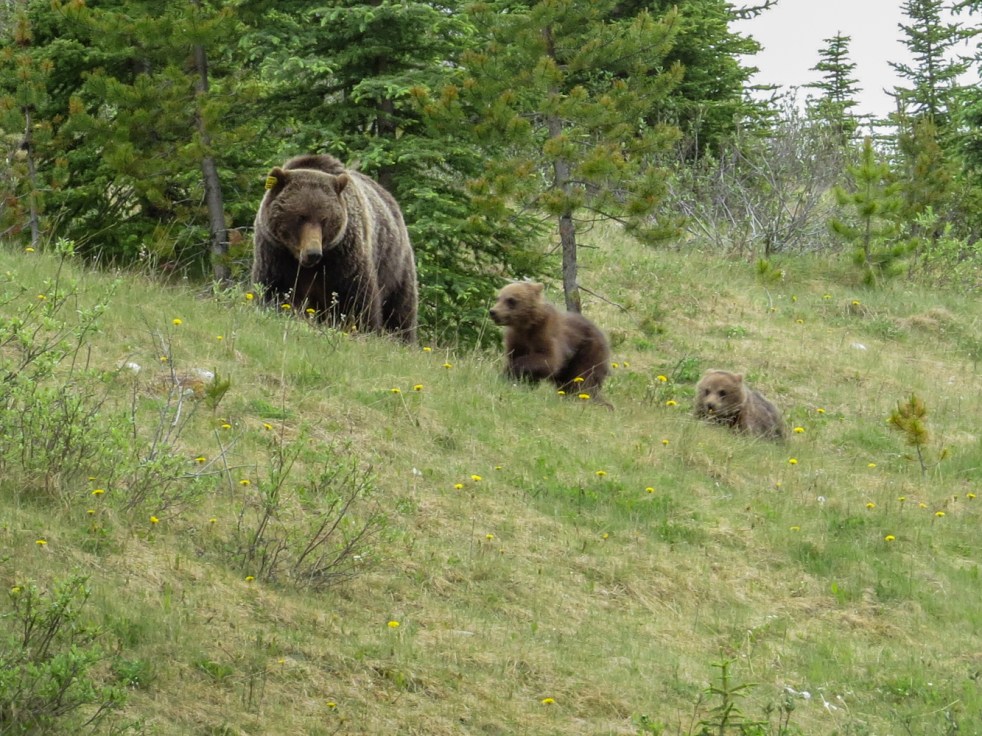


Lake Louise
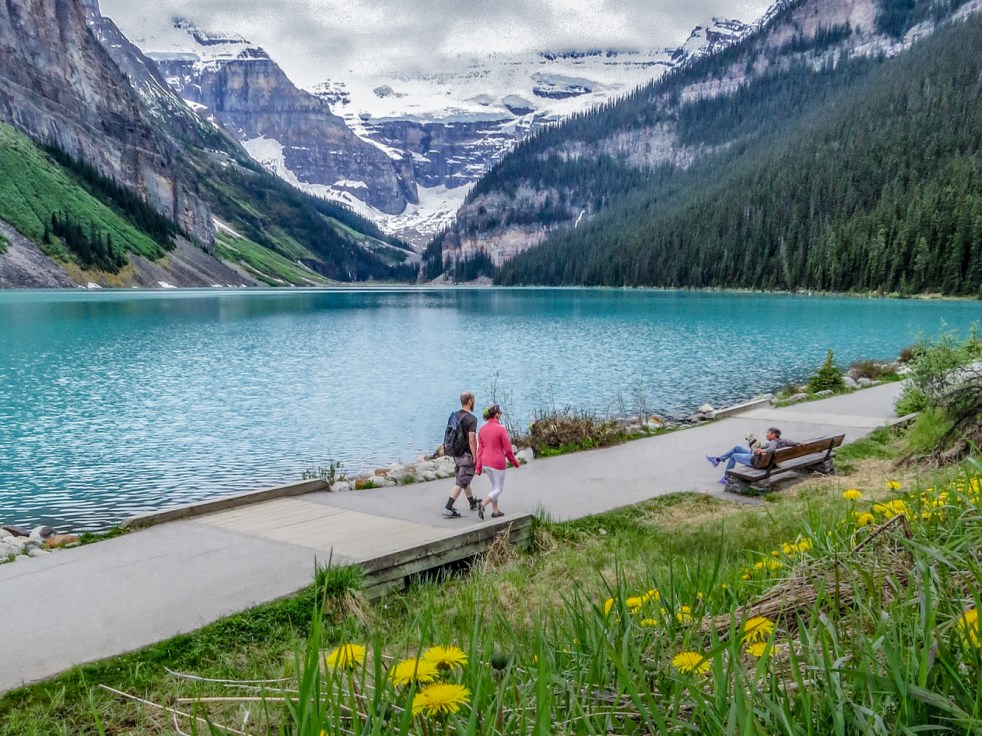
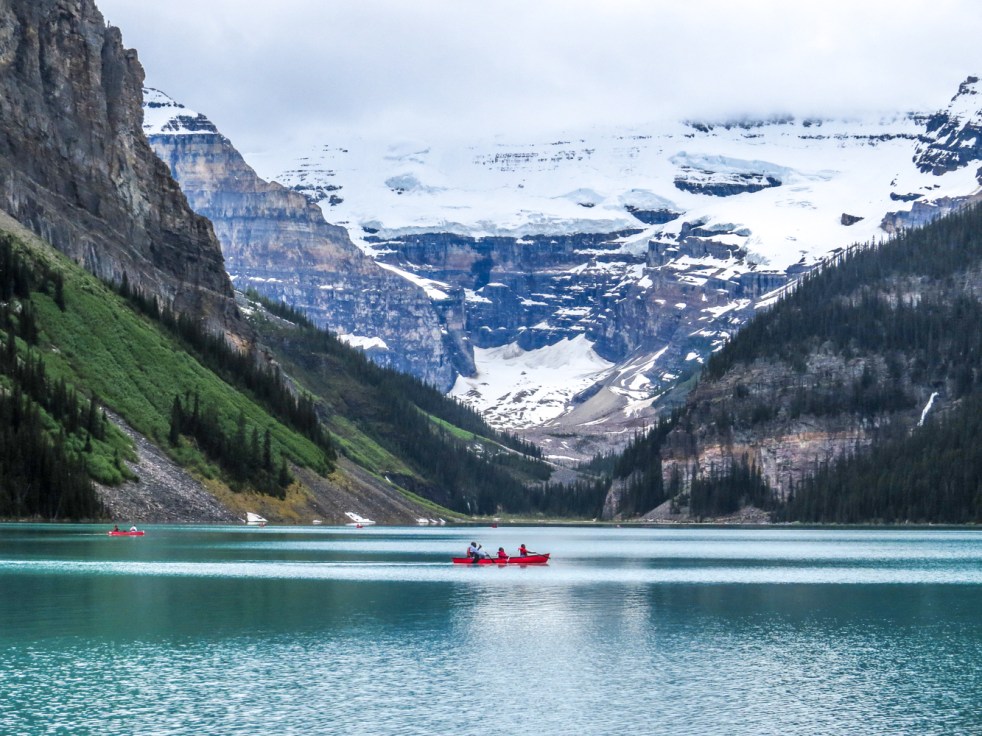
Even on an overcast day, it’s hard to describe Lake Louise as anything but breathtaking. Located within Banff National Park (a UNESCO World Heritage Site), the turquoise lake dramatically offsets Victoria Glacier, and no matter how many photos you have seen of it, there’s nothing like walking the path or sitting awhile to let it soak in. (I am not the one doing the yoga pose, but I understood her need of it.) The fabulous Fairmont Chateau Lake Louise Hotel overlooks the lake, but for me it couldn’t compete with this natural beauty.
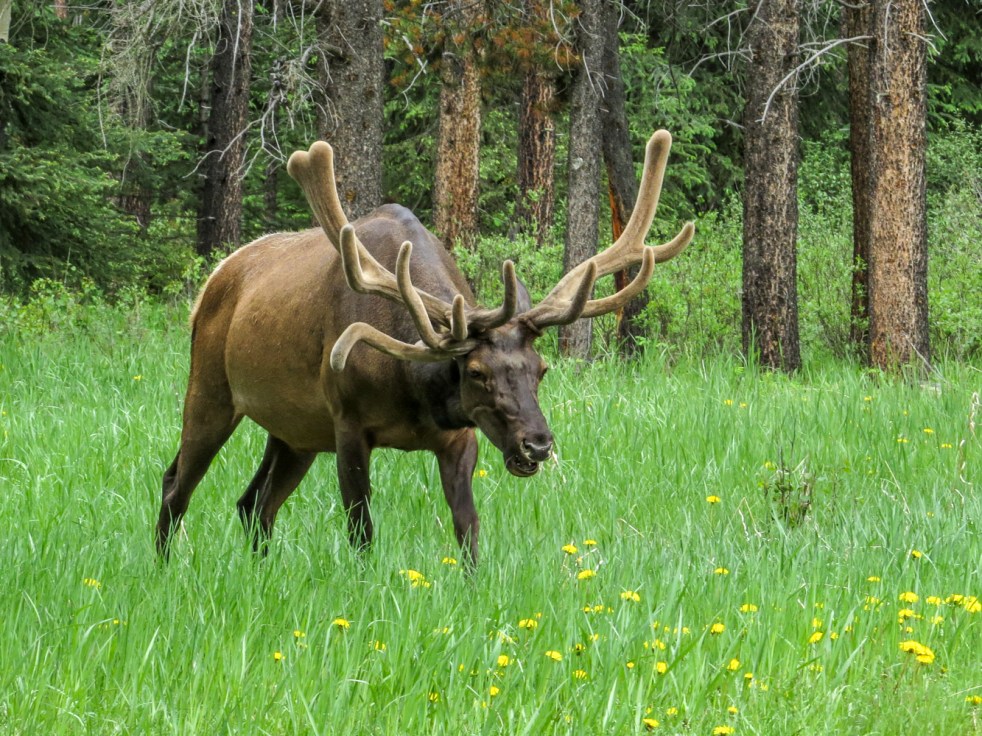
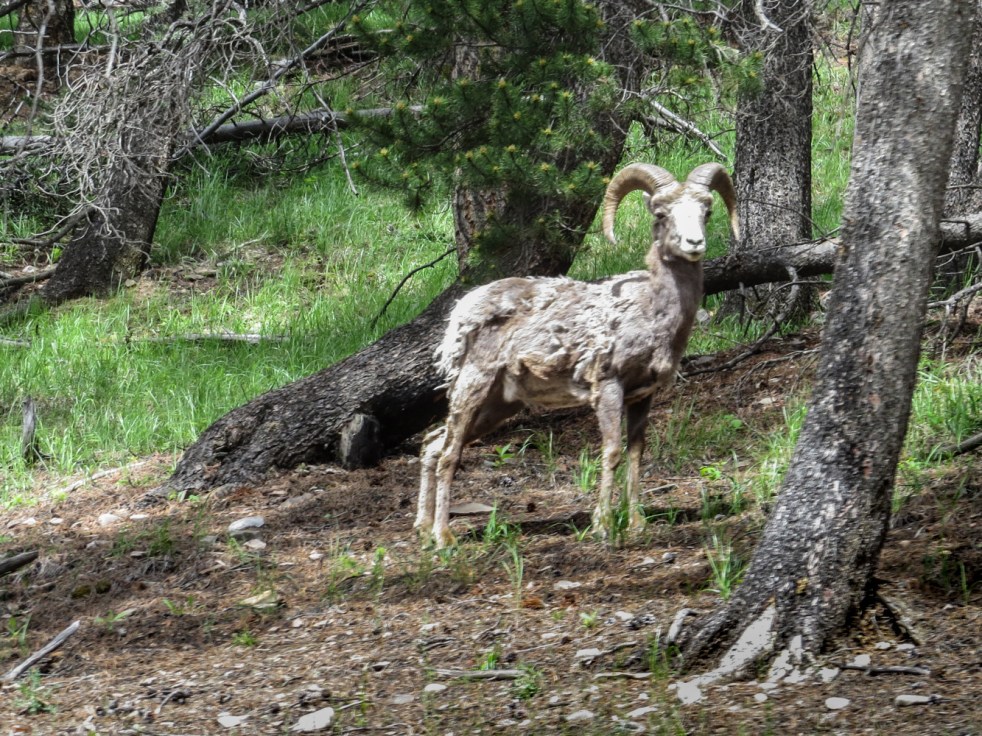
Our animal friends continued to contribute to our enjoyment along the way.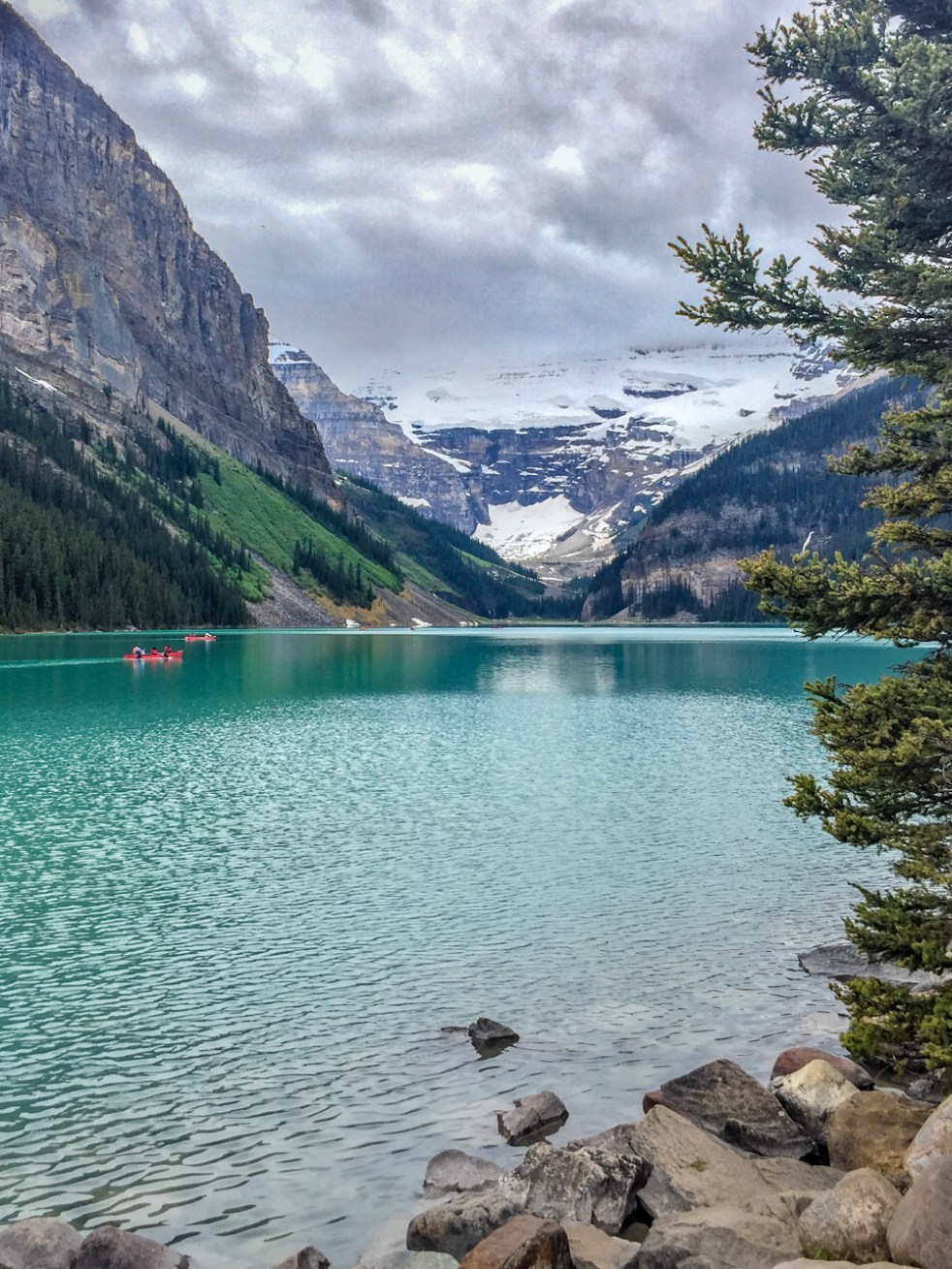



Rocky Mountain High
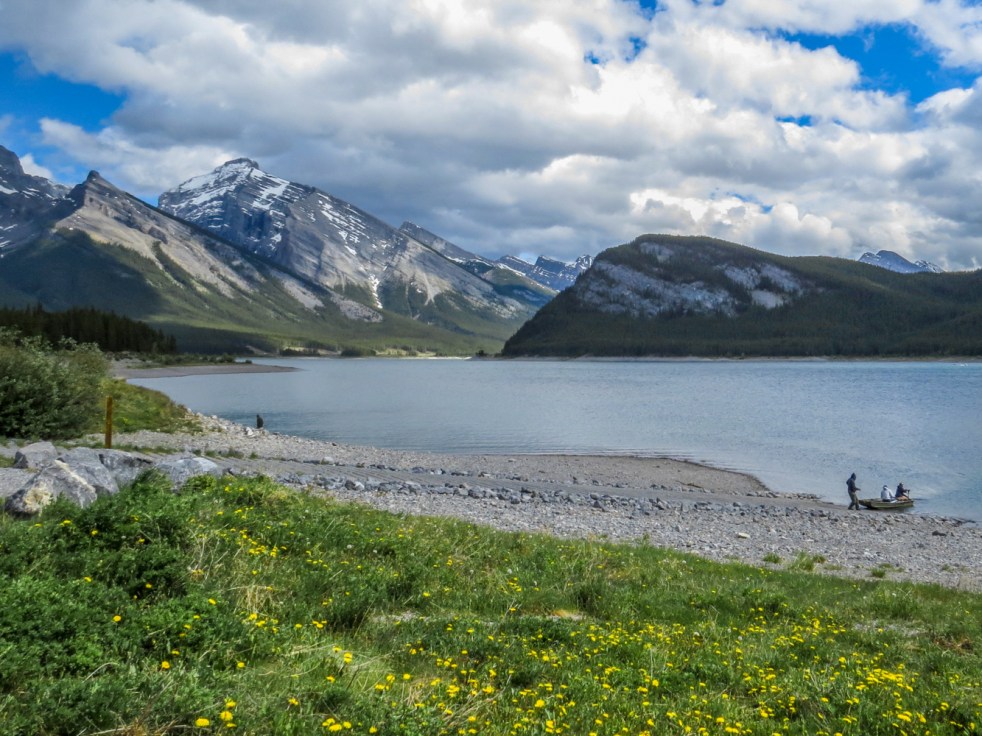
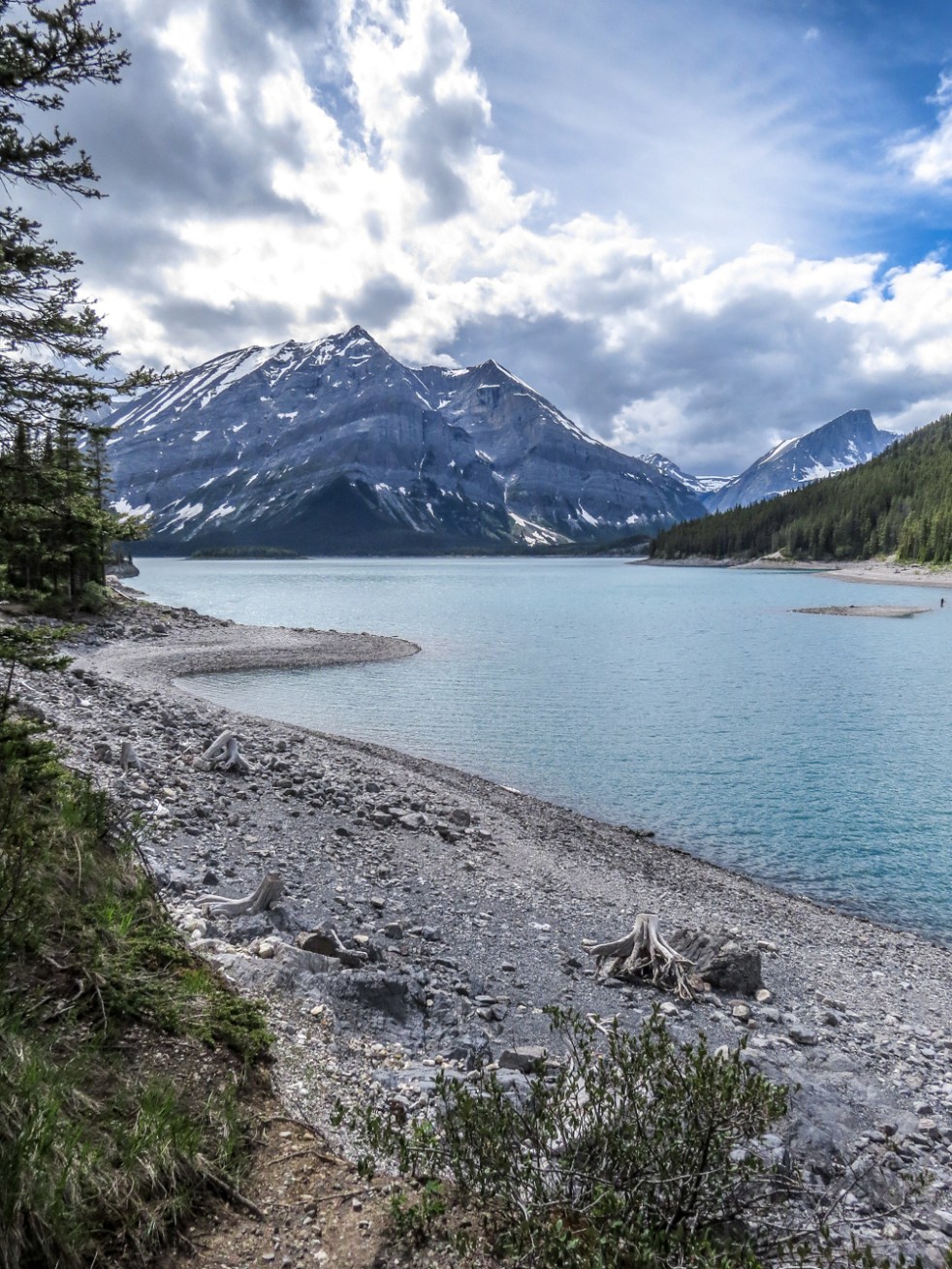
Kananaskis County lies in the foothills of the Canadian Rockies, and is home to an extensive provincial park system that includes venues used in the Winter Olympics and a G8 Summit. Our explorations were enhanced when Tim and Corky joined us for the week, and after their alarmingly too close bear encounter (3 adults and 2 cubs) during a walk in the woods near our hotel, we proceeded with caution and Tim’s bear spray.
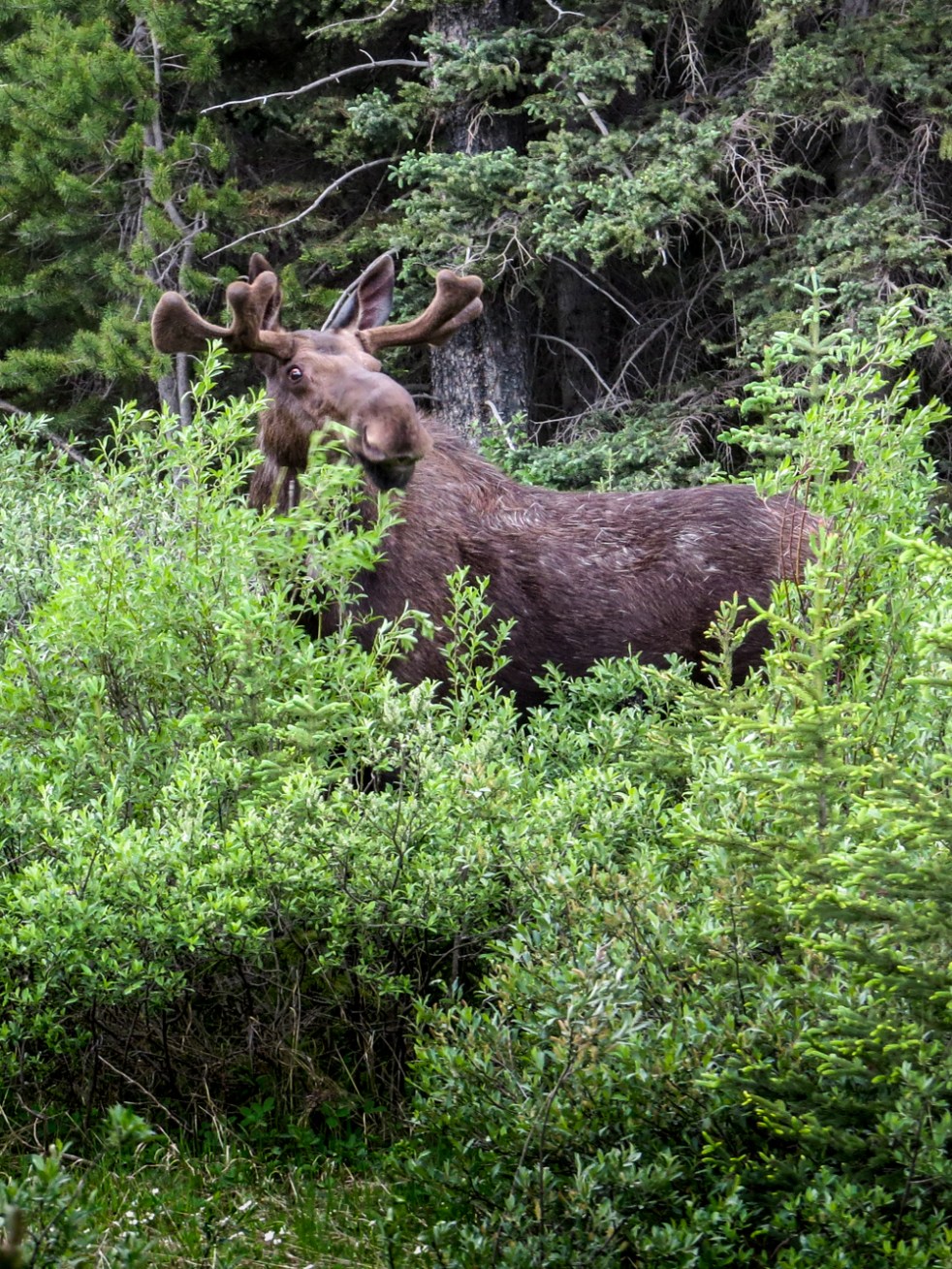
The area is replete with gorgeous vistas, valleys, lakes, wildlife, and the pleasant town of Canmore. Bighorn sheep love to lick the salt on the highway, which provided initial amusement but ultimate annoyance with the frequency of our meeting. Our challenge was to make forward progress while avoiding sheep leaping over guard rails and moose deciding whether or not to cross the road in front of us. It was a highly entertaining few days.



Bears

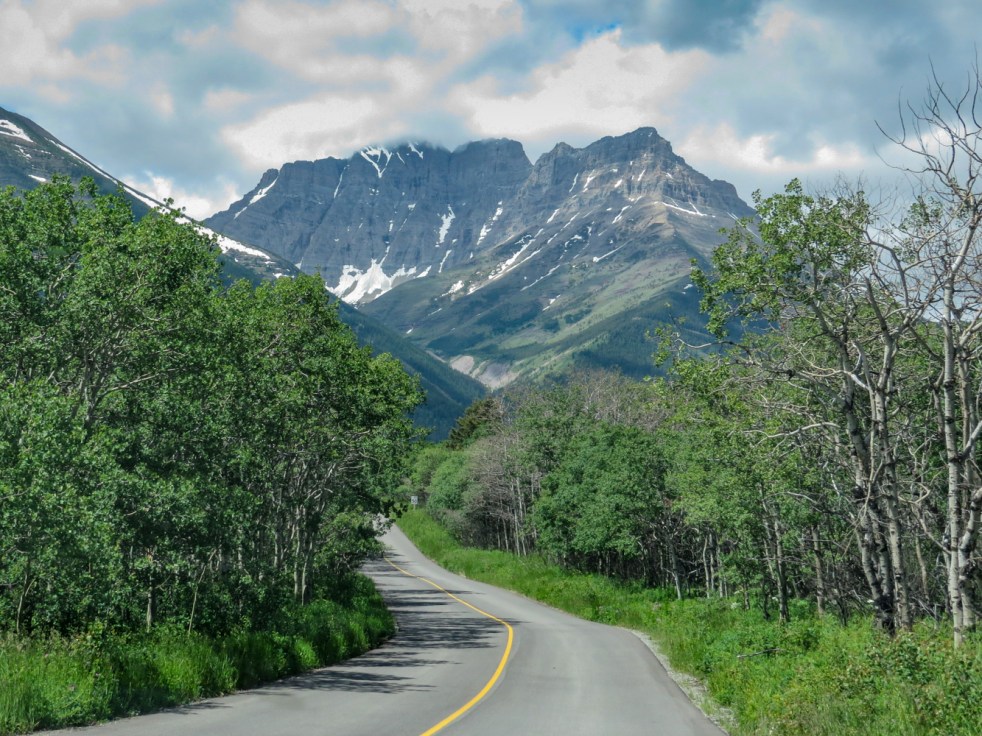
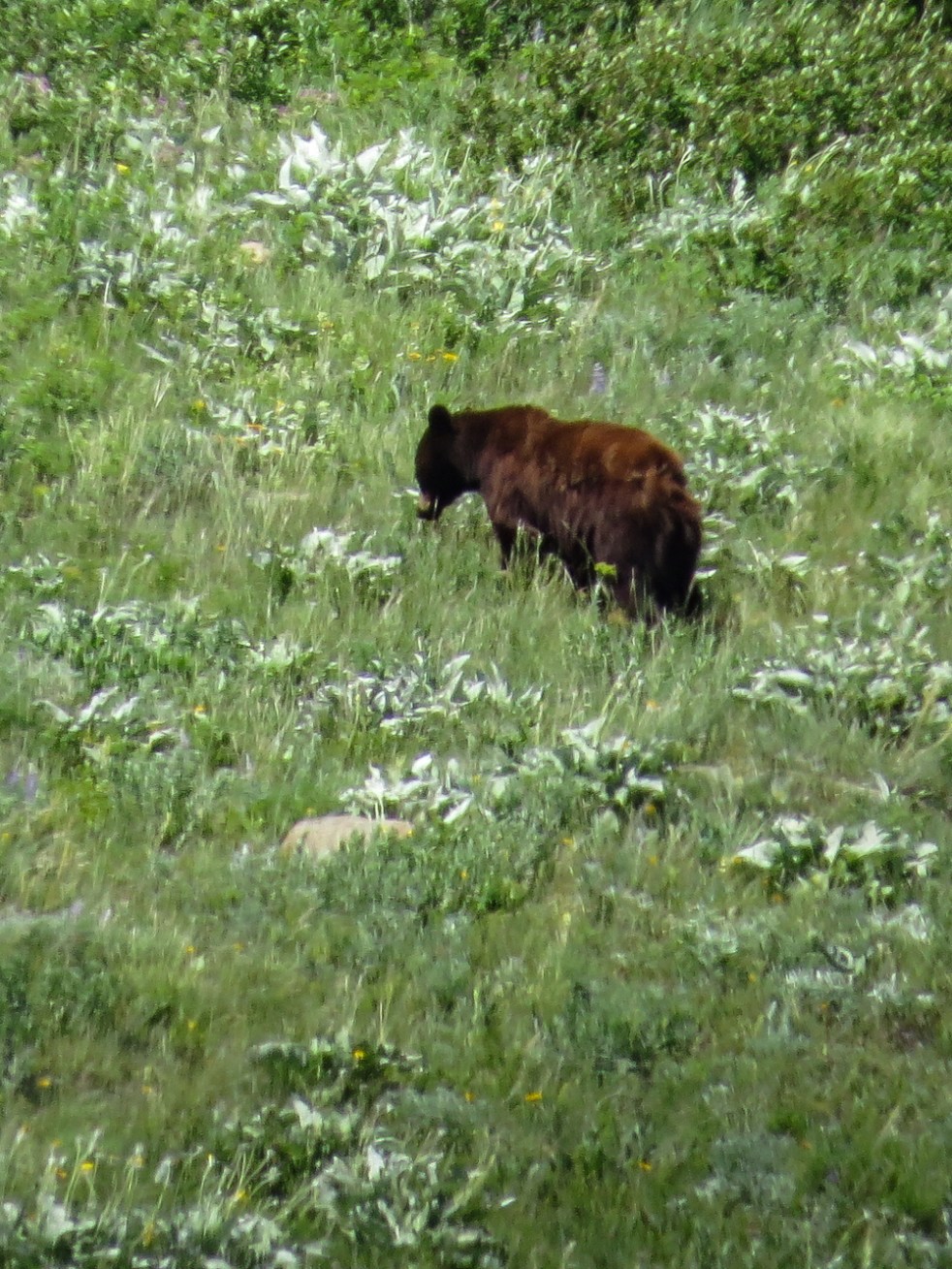
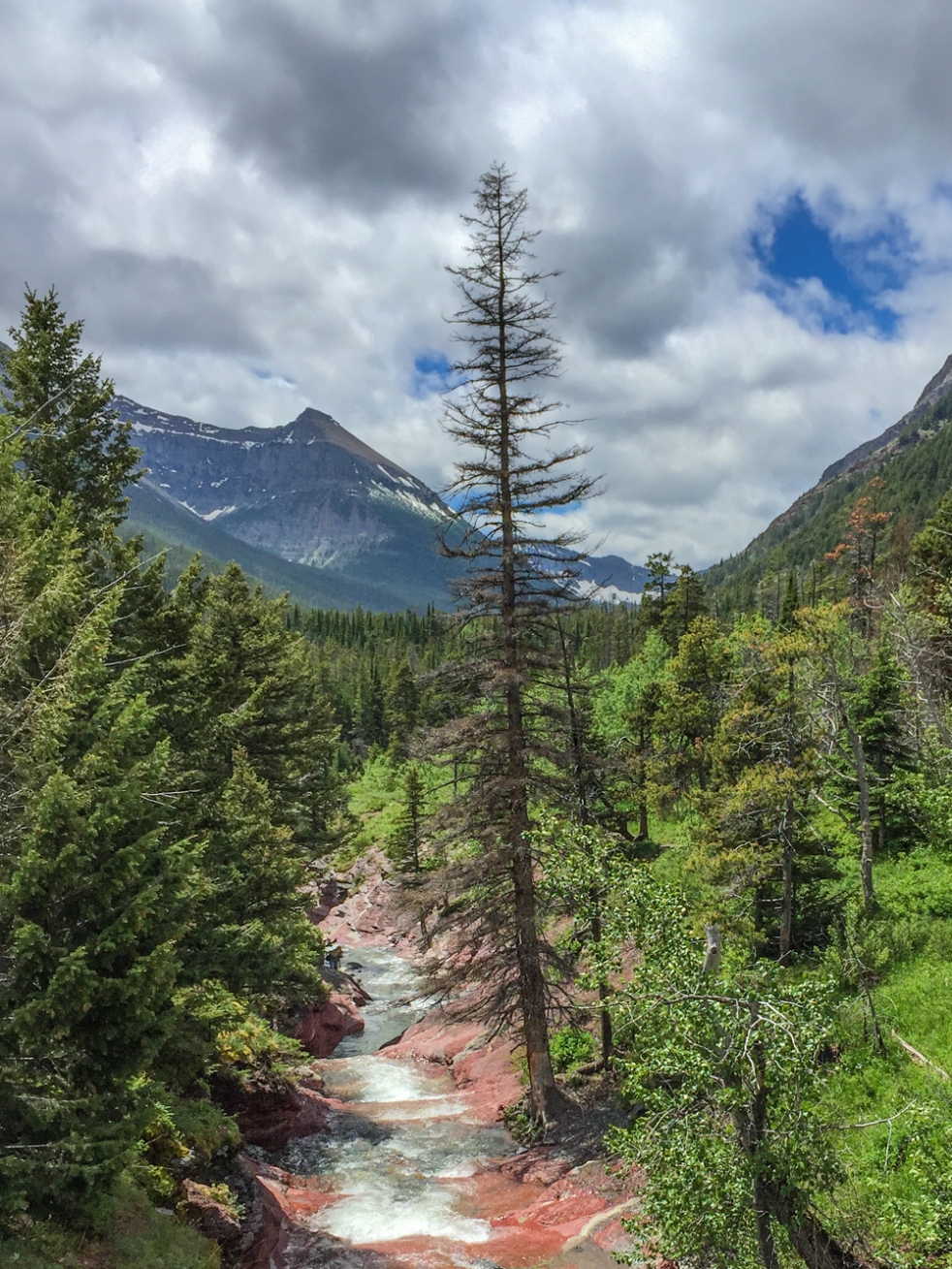
I took this photo of a bear prop near the road leading into Red Rock Canyon at Waterton Lakes National Park, convinced it was likely to be our only wildlife sighting on the trip. And then we turned the bend… (I do have a reasonably good telephoto lens on my camera, but without a tripod, not the steadiest hand).


Watertown-Glacier International Peace Park
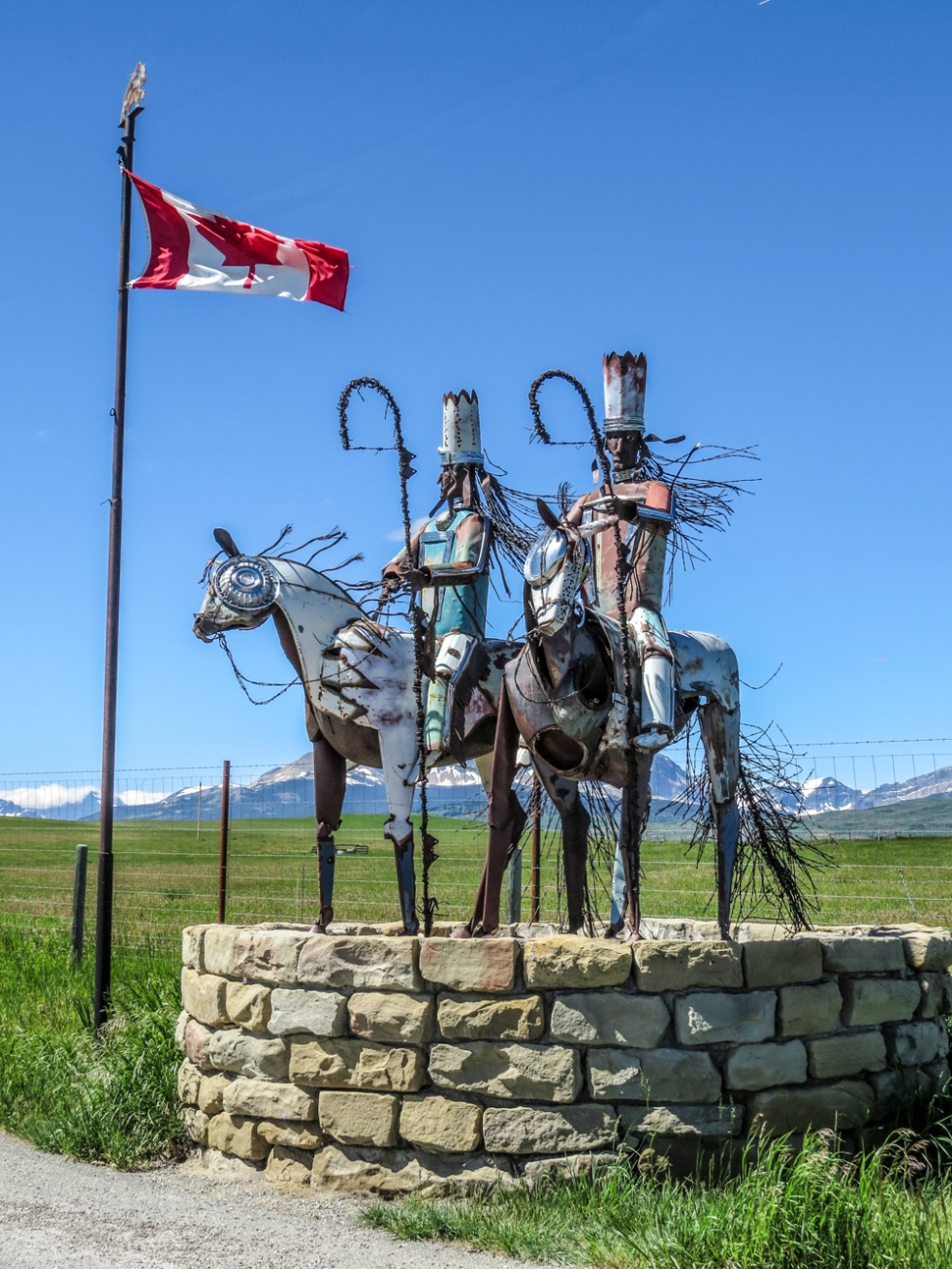
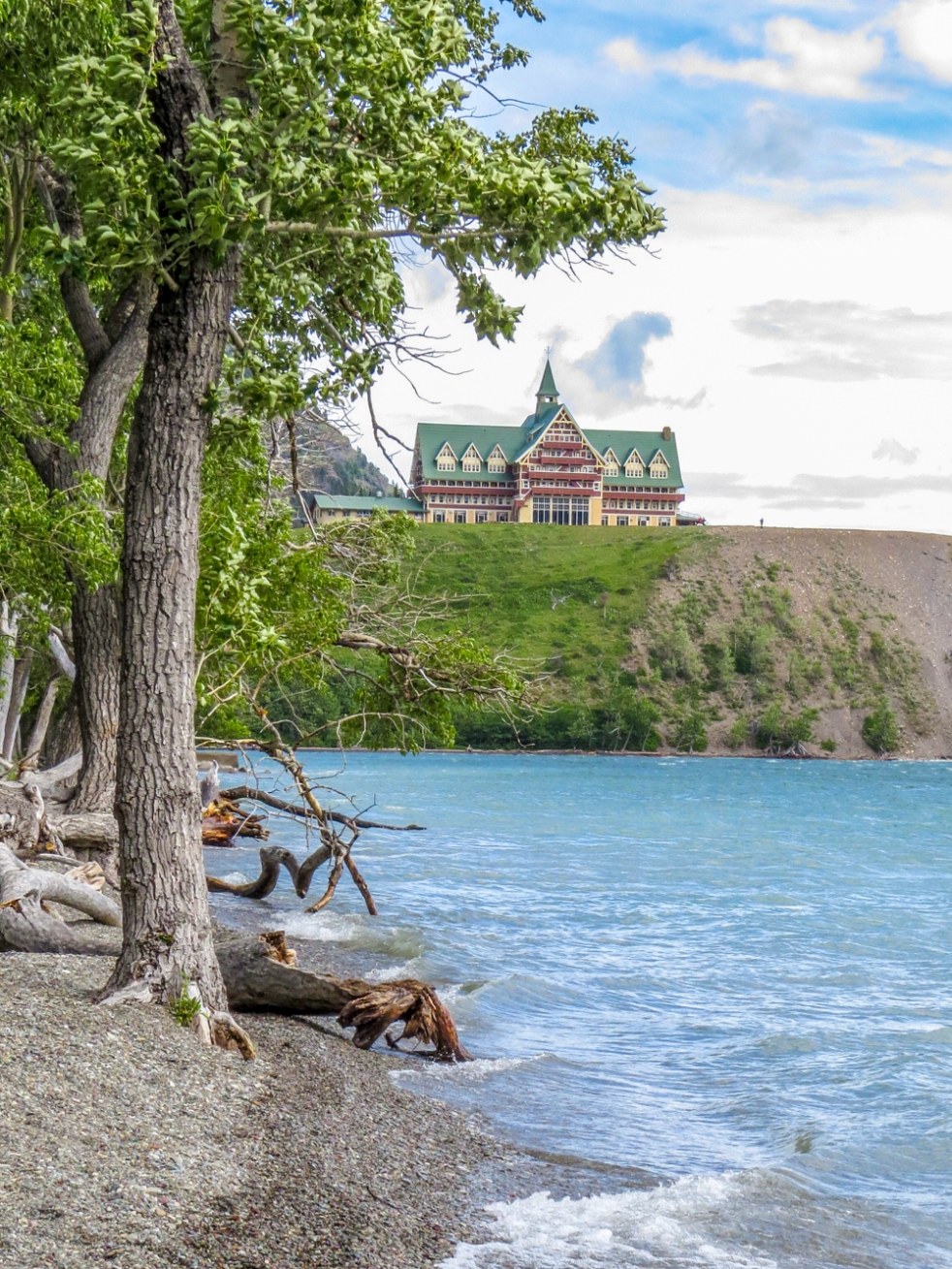
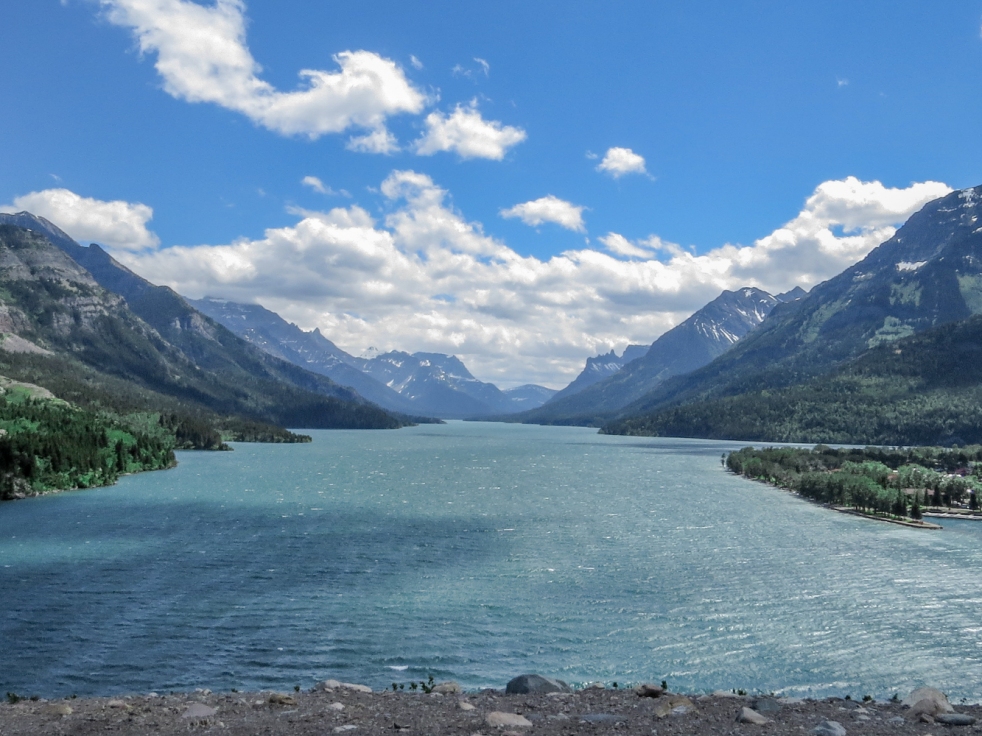
It was a pleasure to drive through the Blackfeet Indian Reservation and the Blood Indian Reserve, from the eastern Montana side of Glacier National Park to the Canadian side in Waterton Lakes National Park. The Waterton-Glacier International Peace Park was named a UNESCO World Heritage Site in 1995, and it is a richly diverse ecological wonder. Watertown is also home to the iconic Prince of Wales Hotel (dating from the early 1920s) which sits on a wildly windy precipice overlooking Upper Waterton Lake.
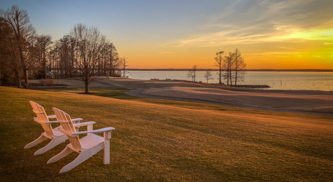
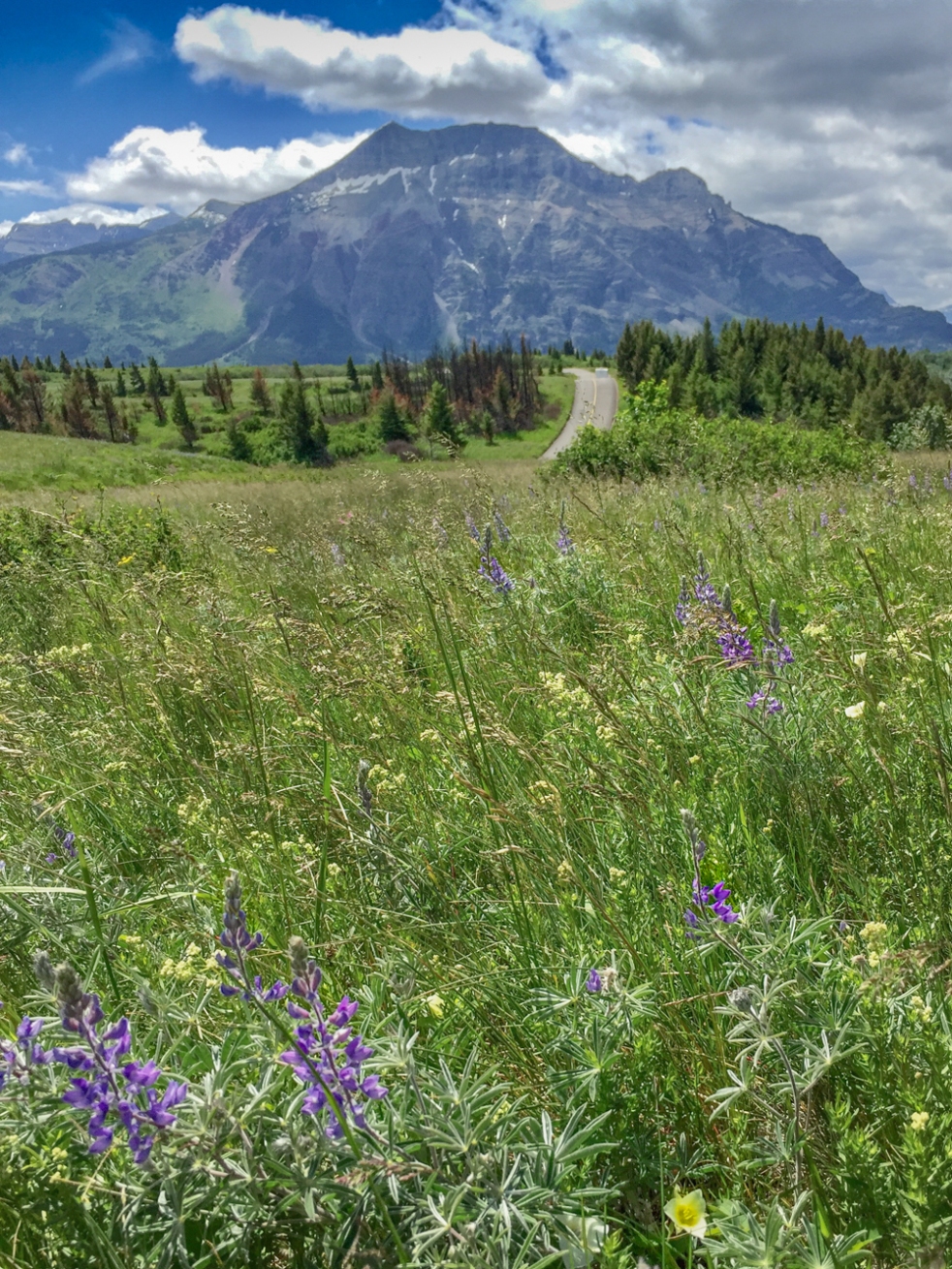
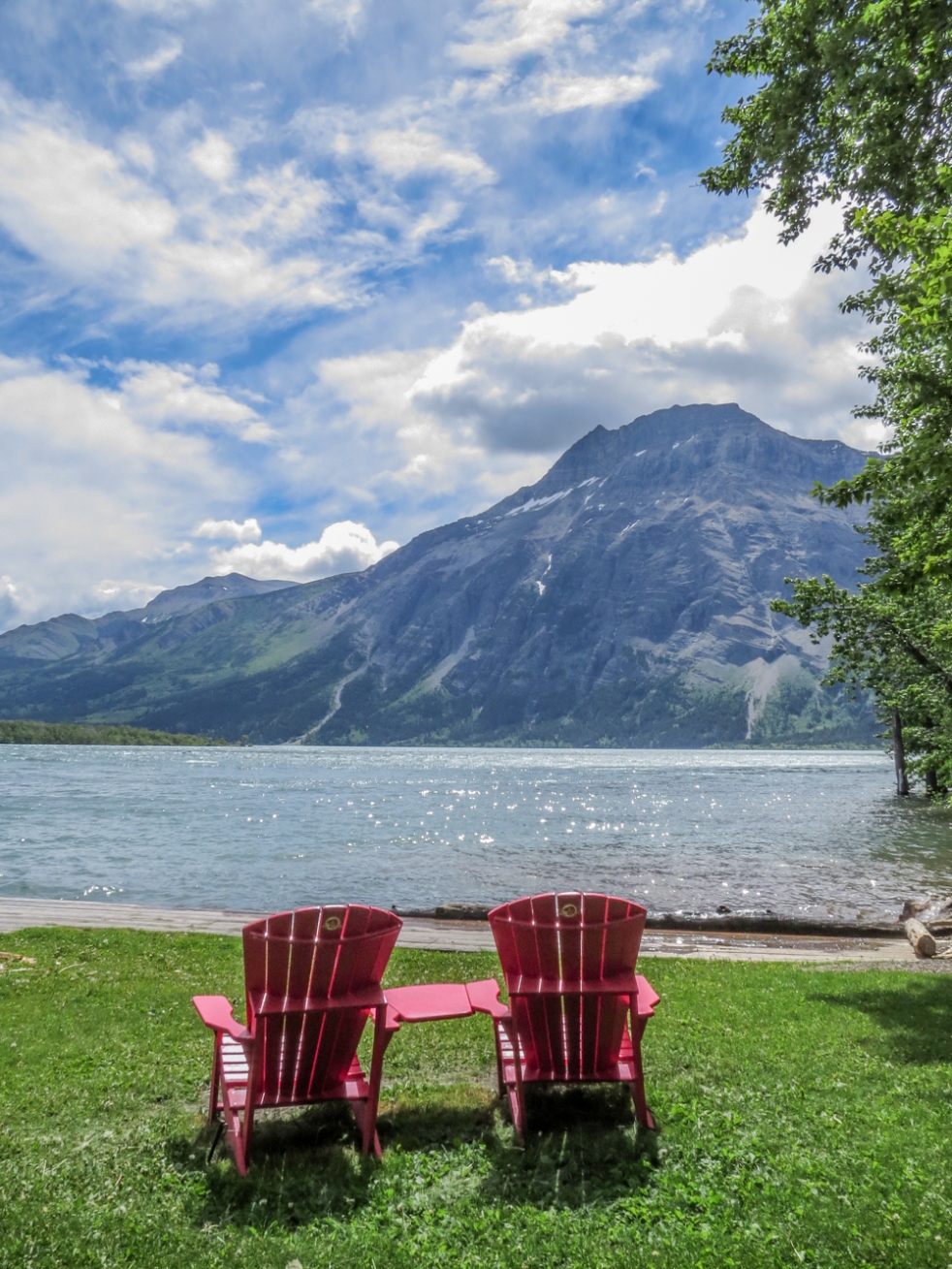
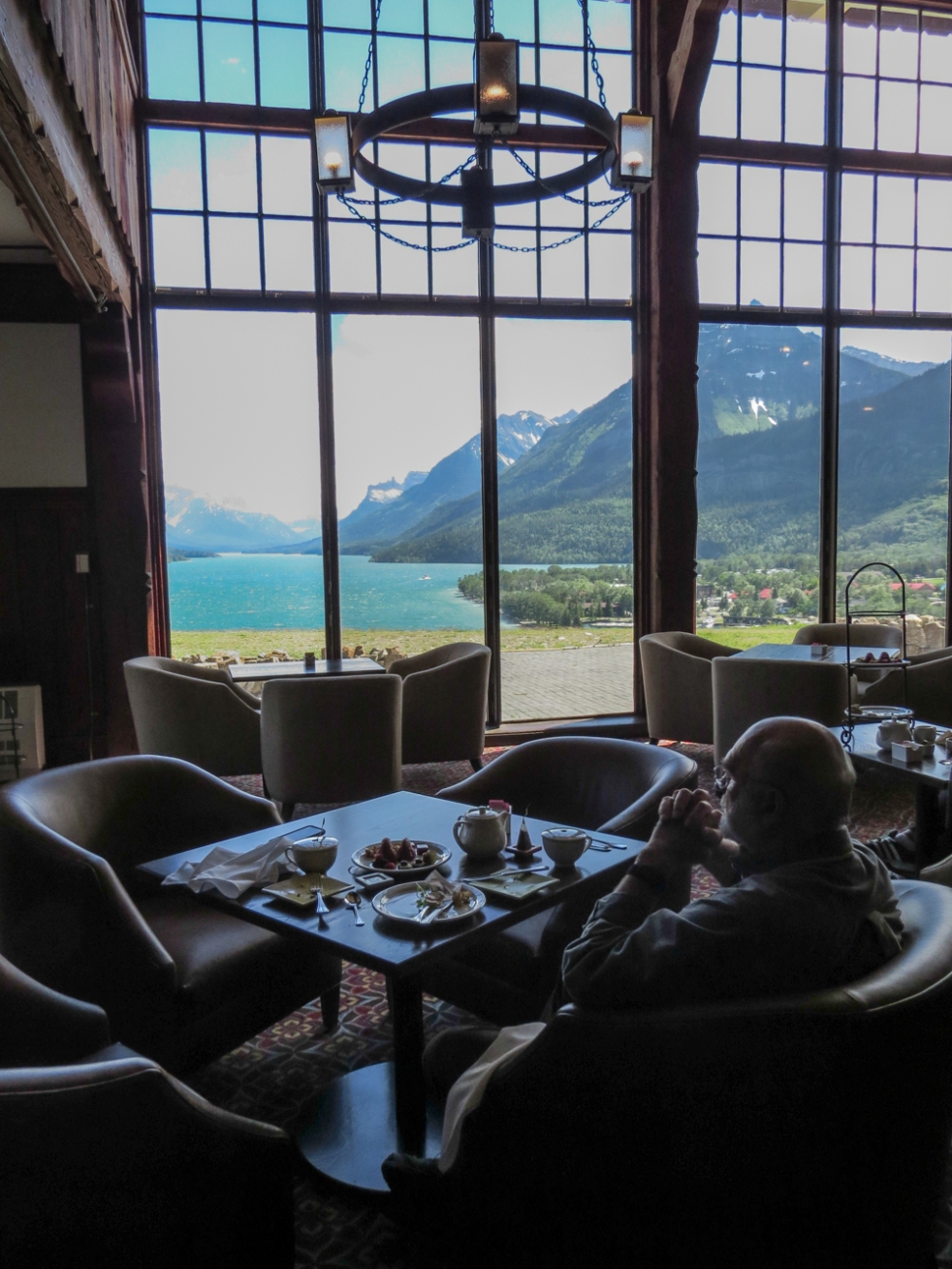
It was wildflower season in the park, which added to already dramatic scenery, and we loved the red Adirondack chairs beckoning us to rest. The Canadian National Park Service places these chairs in gorgeous locations all over the country as a call to sit and appreciate…what an idea! When we finally reached sensory overload, we found refuge by taking afternoon tea in the lobby of the Prince of Wales Hotel. Very close to Heaven.
Beargrass
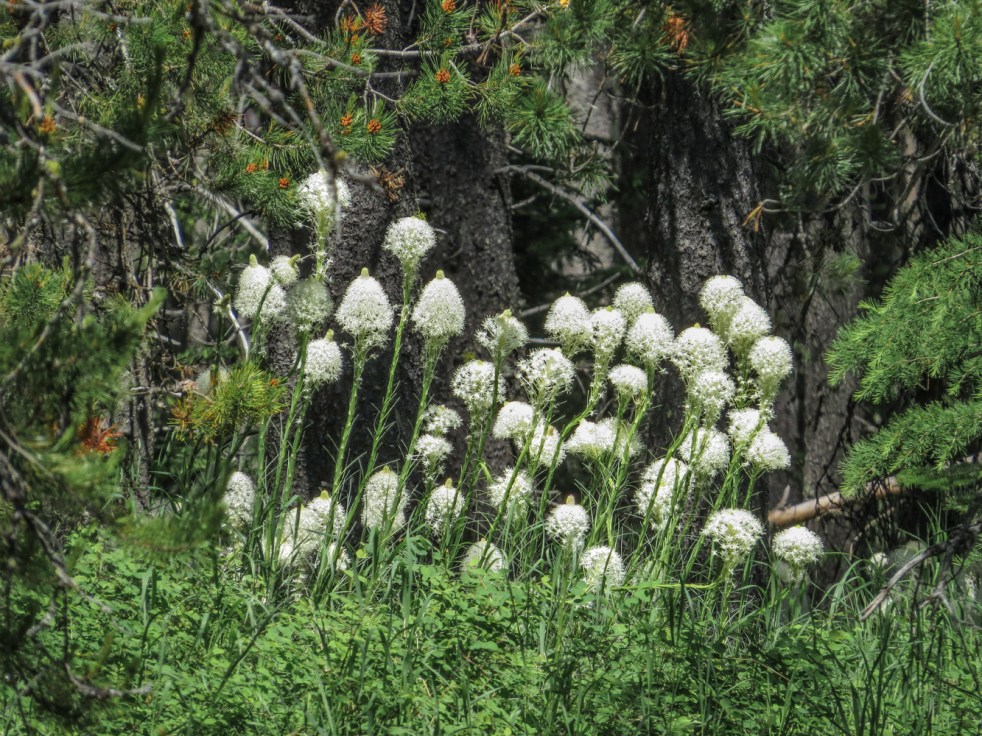
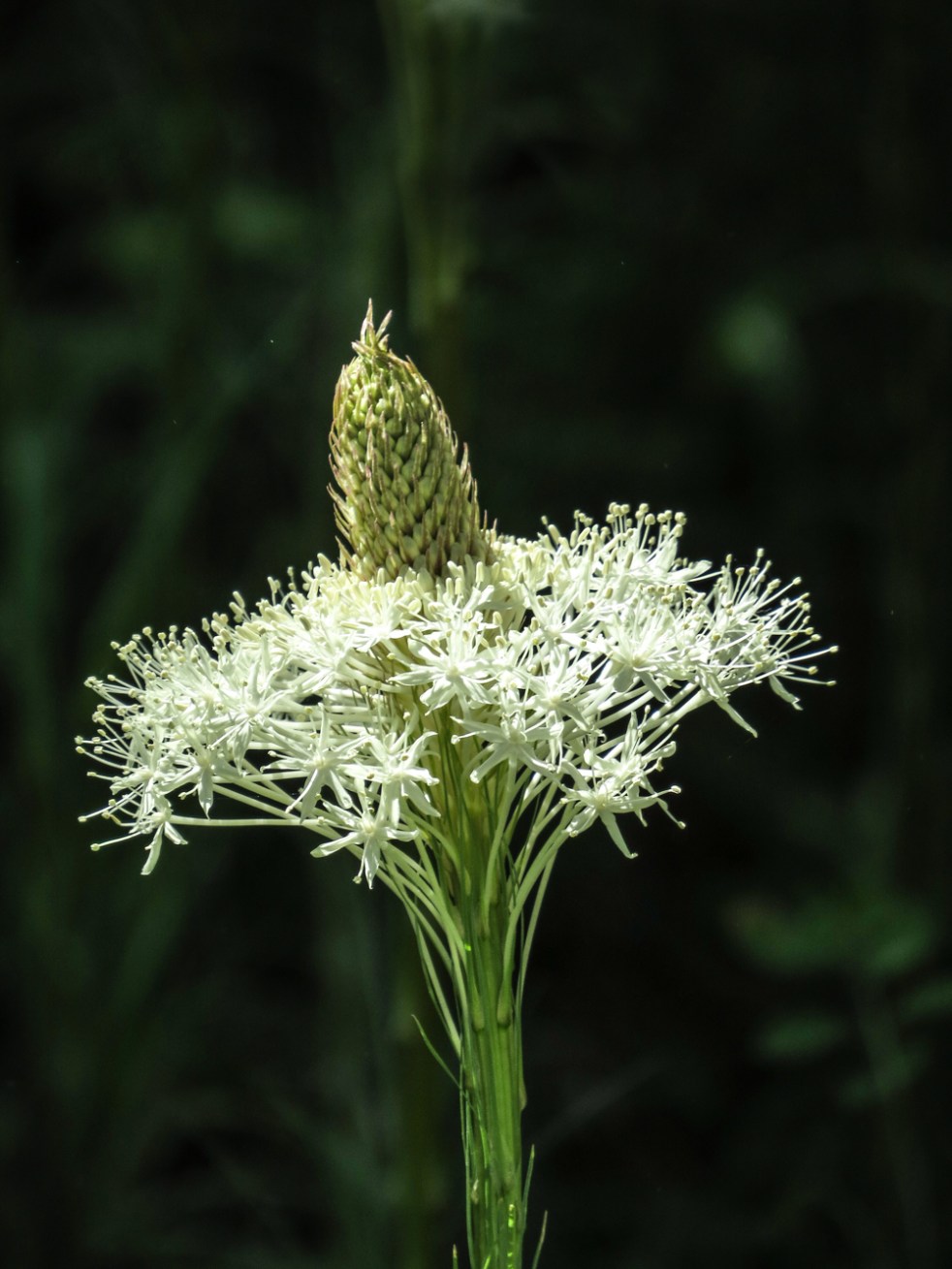
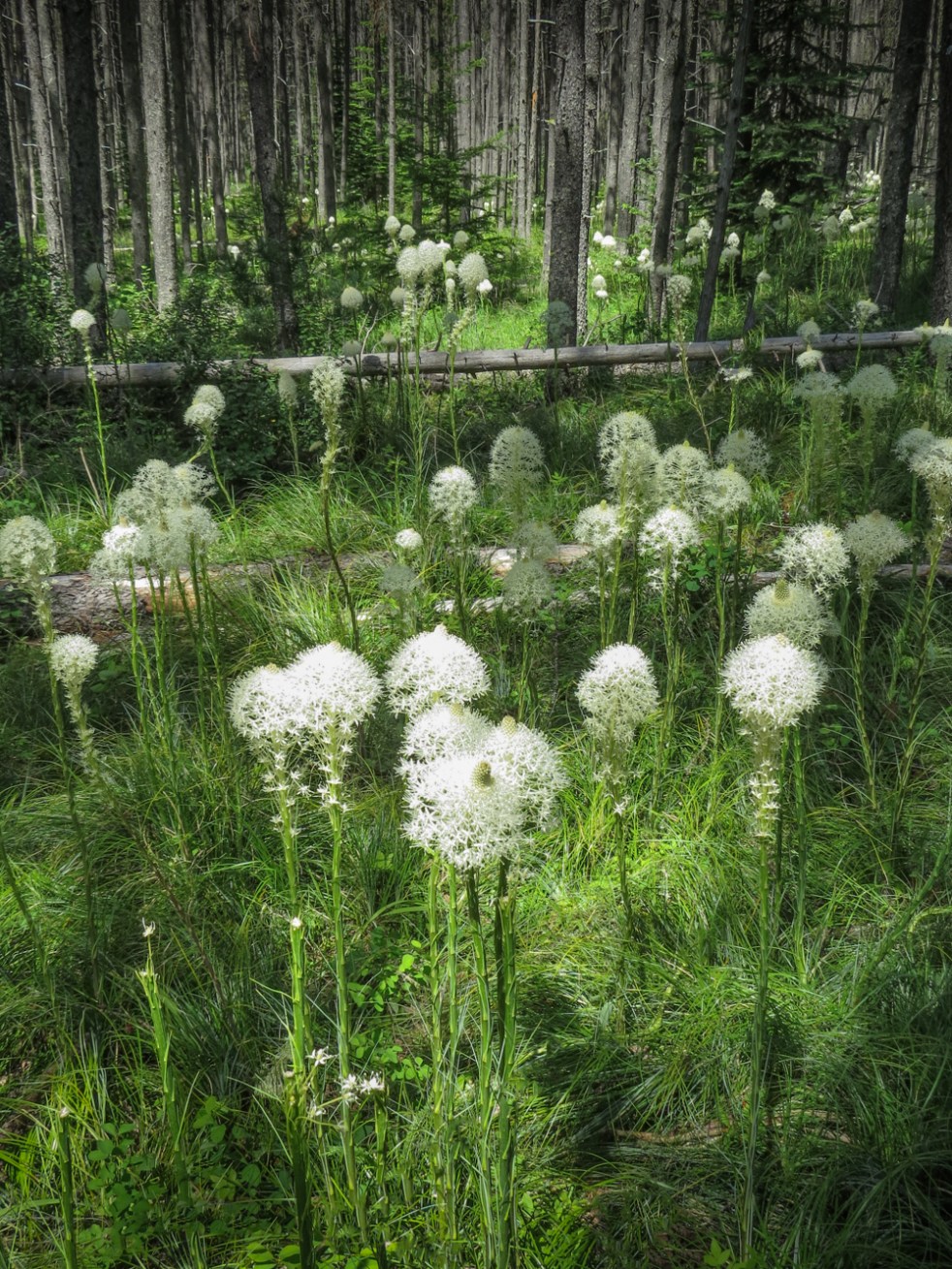
I‘d never heard of it, but as more and more of these tall white stalks appeared along the roadside, I began to wonder what it was. And then I had to stop and walk into the woods to make sure my eyes weren’t deceiving me.
The National Park Service website informed me that beargrass is a wildflower that blooms near the west entrance to Glacier National Park, and was named by the Lewis and Clark expedition. It can grow up to five feet tall and each rosette blooms only once. Bears don’t eat it, but sheep, deer, elk and goats do. Beargrass can be seen annually, but sparsely, in the spring… but if conditions are just right, with ideal rainfall and soil moisture, mass blooming can occur… every five to ten years! Who knew we would be so lucky?!!!!



 My Time Too