My TV is off, I have removed all news feeds and social media links from my phone and computers, and I’m going to make a daily effort to look more closely at the truly irreplaceable things in my life.



My TV is off, I have removed all news feeds and social media links from my phone and computers, and I’m going to make a daily effort to look more closely at the truly irreplaceable things in my life.
It’s a question to take seriously, and I found my answers troubling. My favorite pundit and “truth seeker”, David Brooks, spoke about trust (and lack thereof) in a recent interview. He expressed concern (if my interpretation is correct) about the general lack of trust that seems to be spreading across our culture and the corrosive negativity dripping into our collective psyche from that lack of trust. Who do you trust, and why?
Brooks seems to believe that trust is necessary for a society to successfully function and grow, and that trust most easily finds a foothold at the community level, from connections such as those with which we used to be more familiar, when we lived in closer contact with more personal interactions. I remember having a professional relationship with a banker, for example, and we knew one another by name. Now I feel as though I become more invisible by day, in every way. Is this an undercurrent of the societal upheaval we seem to be experiencing, I wonder? Lack of trust?
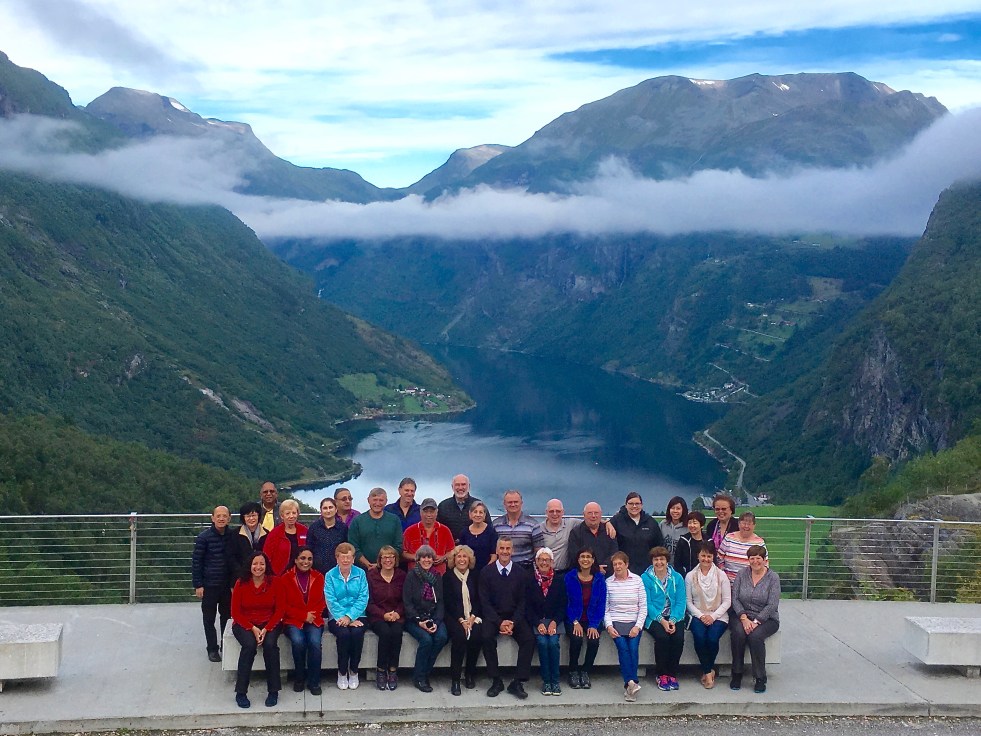
I had an interesting adventure this past month, in keeping with this subject. We went on a tour, on a bus, with 30 strangers from 6 countries. All had chosen to change from usual pursuits and tolerate one another for a period of time for different reasons. On a tour, for a minimum of 14 days, there’s little getting away from one another. Cultures were expressed among us in different ways. We were completely at the mercy of two strangers in particular: the tour director who set our requirements, and the coach driver who was challenged by hazardous driving conditions daily. The entire experience required trust.
The start of a tour, in our experience, is wary, and fraught with unsettling first impressions. It’s like the start of summer camp, or jury duty. Group standards have to be established and managed (which is the responsibility of the tour director), but participants have to buy into the program. There is peer pressure for accountability and responsibility. Interaction is forced immediately, ready or not.
As information replaces uncertainty, and experience rises to expectations, we begin to relax. Facades fade, we start to exchange stories from our own cultural experiences, while new shared events subtly create group cohesion. It’s a powerful dynamic to witness, as “me” morphs into “we”.
On tour we listen, we are respectful, we compromise, we learn that our way is not the only way, nor the best way, and we are reminded to laugh. We find that everything doesn’t go as we might wish, and that we need to be prepared for changing conditions. We experience tedious times between dramatic times. We find it’s not important to be first in line. We actually develop a small community among complete strangers, committed to the common goal of a pleasant experience, nurtured by trust and support.
What does it take to earn trust, and what do you have to do participate in developing it? It’s a much harder question to answer at home than on tour, but I’m grateful that our tour reminded me of how trust feels, and it’s value.
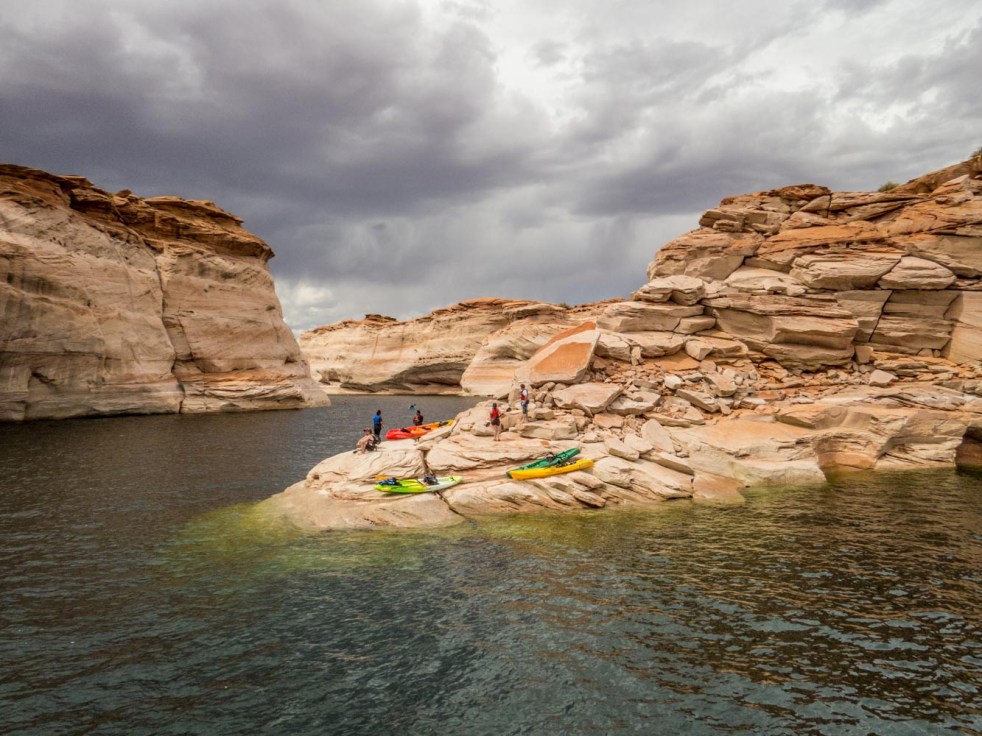
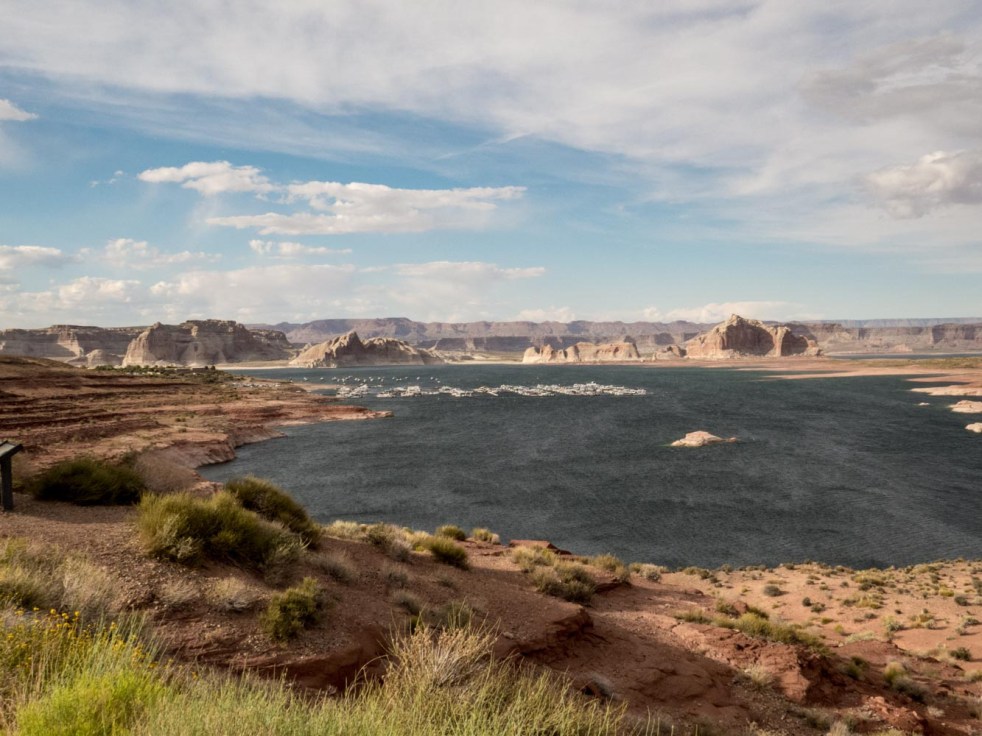
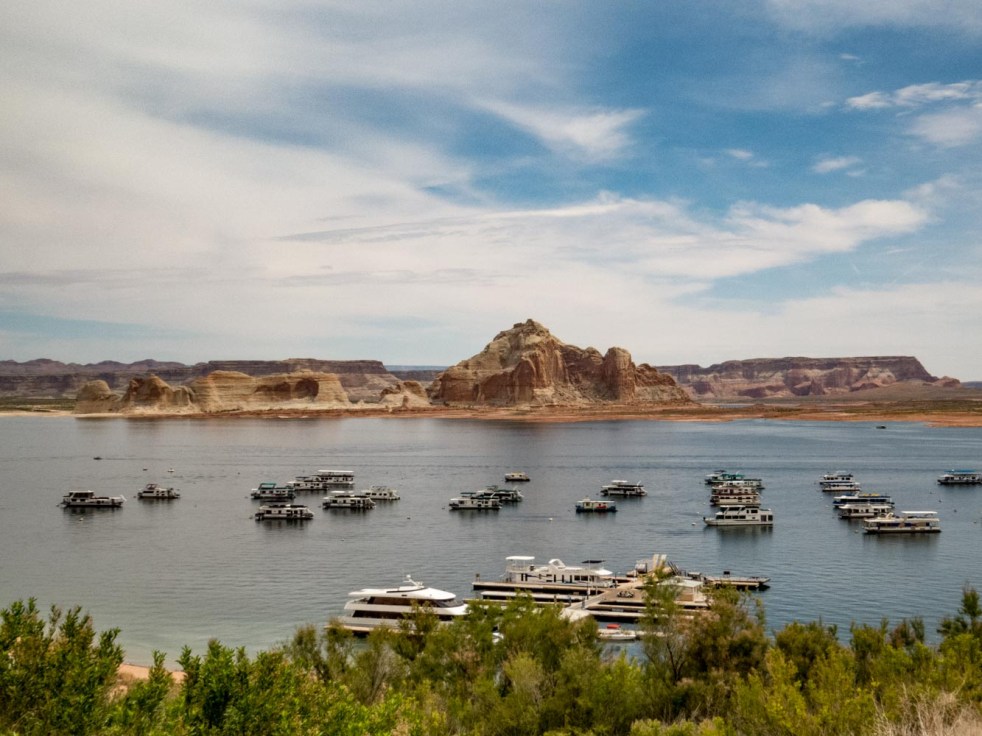 Yes, this is still our Arizona-Utah National Parks trip (will it ever end, you ask? Not quite yet..!) We changed our pace for several days in Page, AZ, enjoying Lake Powell and the Glen Canyon National Recreation area. After the desert landscapes of Utah, it was impossible not to be captured by the water. We opted for a boat cruise into narrow, winding Antelope Canyon to see its red and orange Navajo sandstone formations, and got caught in the rain you see threatening us. Kayakers in the canyon were also pummeled, which seems to be a price one pays for adventuring on the lake. The afternoon cleared into a beauty of an evening.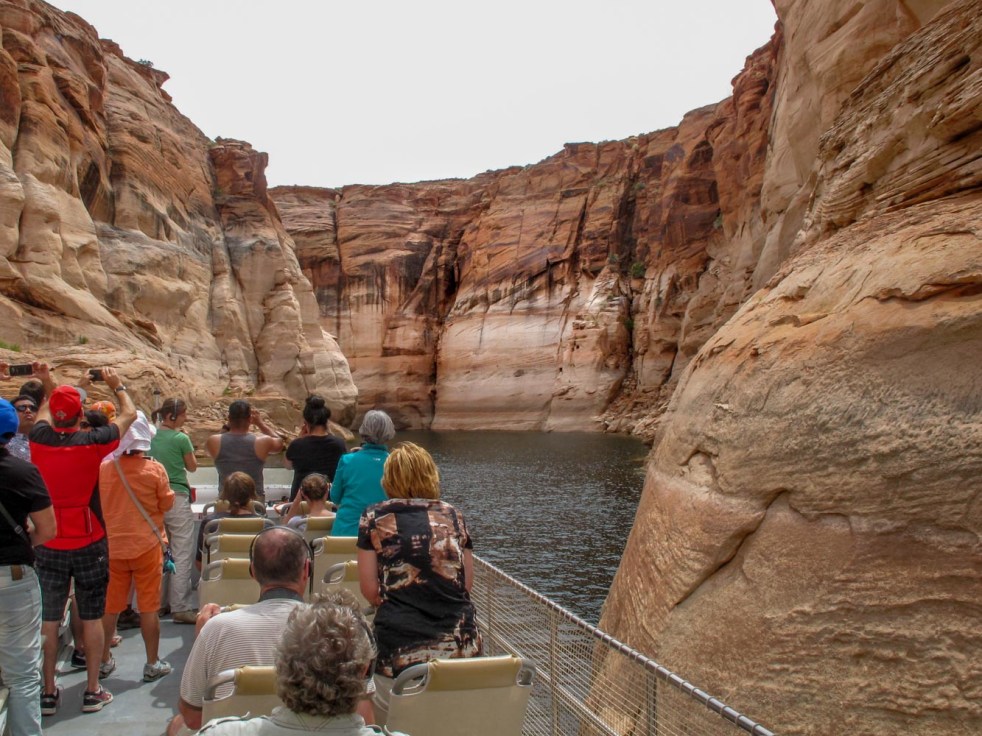



Many years ago, as holiday stresses overwhelmed my enjoyment of the season, I decided to change how I participated in it. It was relatively easy to eliminate chaotic mall visits, most gift buying, card writing, fevered cooking and decorating and entertaining, but then what? We had moved halfway across the country and friendships had not yet developed, so we decided to try a trip away from home to divert our attention from old habits. That decision began our experience of Mexico, and the Virgin of Guadalupe festival that precedes Christmas celebrations in that culture. The gifts of fruit and flowers that are carried into the parish church, the mariachi music that rattles windows and rolls down the street through the processions, the tolling bells, the children’s faces, the aromas of food vendor stalls, and pleasure of witnessing expressions of faith entwined with national pride was a complete change from our old customs. For more than twenty years now, this has been our preference for the perfect Christmas holiday.


If the festival itself isn’t enough, placing this experience in a natural environment that only engenders awe, and sharing it with friends, makes it the kind of spiritual holiday I choose over all others. It is replete with gifts that never end.


I visited San Miguel de Allende for their Dias de los Muertos celebrations this year, not for the first (nor hopefully the last) time. San Miguel is a beautiful small city in central Mexico, a UNESCO World Heritage site known for its preserved 17th and 18th century town center and many lovely churches. The Centro area a feast for the eye, colorful and very walkable; no car is necessary or desirable to fully enjoy it.


The Day(s) of the Dead festivities may be underway much in advance of their observance, but evidence of preparations become public on All Hallows Eve (Halloween) as private altars (oftendas) appear in homes, stores, and on the streets around town. In Mexico, All Saints Day (November 1st) and All Souls’ Day (November 2nd) focus on the remembrance of family members and friends who have died, and the bonds that continue to be held between the spirits of the living and the dead. Families go to cemeteries to clean and decorate the graves of the deceased, covering them with marigolds (the flowers of the dead), muertos (bread of the dead), and favorite foods, drinks and possessions of those who are gone. Some grave adornments are incredibly elaborate, some very simple, and it is common to see family members surrounding a grave site, accompanied by a mariachi band to help celebrate the life of their loved one. A priest may be summoned for graveside prayers, and picnics permit staying and visiting with the dead for as long as one wishes.
The private altars that are built around town encourage a visit from those living in the spirit world, and include elements important to an invitation to return: water for the soul’s thirst, salt to purify the soul and frighten away bad spirits, candles to guide the soul to its old home, flowers, sugar in the form of skulls or favorite animals, cut paper decorations, fruits and nuts, traditional foods, and photos of the deceased. The altars are all very personal, and quite beautiful.


These festivities are said to be based on ancient cultural practices which have become blended over time with local religious traditions. I loved the observance, and admired the sense of celebration offered as an affirmation of the mystical experience connecting life and death, in contrast to the tradition of cultural denial with which I am most familiar.
More photos are available through Flickr link.


I received this in an email from Charter for Compassion; don’t you love it? I downloaded their graphic, but have a feeling they won’t mind. You can find the organization at Charter for Compassion (Initiated by the TED Prize) contact@charterforcompassion.org.
I have it. Big time. Every time. I worry about being late, missing connections, getting lost, turbulent flights, terrorists, coughing seat mates, lost luggage, lost passport, lost phone, food that bites, currency I can’t compute, too much to carry, shoes that hurt, feeling clueless. Ridiculous anxieties. It’s not like I haven’t done this before. And it’s not like I’ve experienced more than brief episodes of any of the above, with which I’ve coped adequately at the time. So why am I going through this again?!
Anxieties are all about the future, about events that haven’t actually taken place yet (and probably never will.) Looking at each worry separately, I can do something about uncomfortable shoes and taking too much stuff, but since I’m not likely to, they need to come off this list, and move to the list of things for which I can berate myself later. I can also do something about being late, and be early instead. All other issues are caused by lack of attention (note to self) or are…yikes…out of my control…repeat…out of my control.
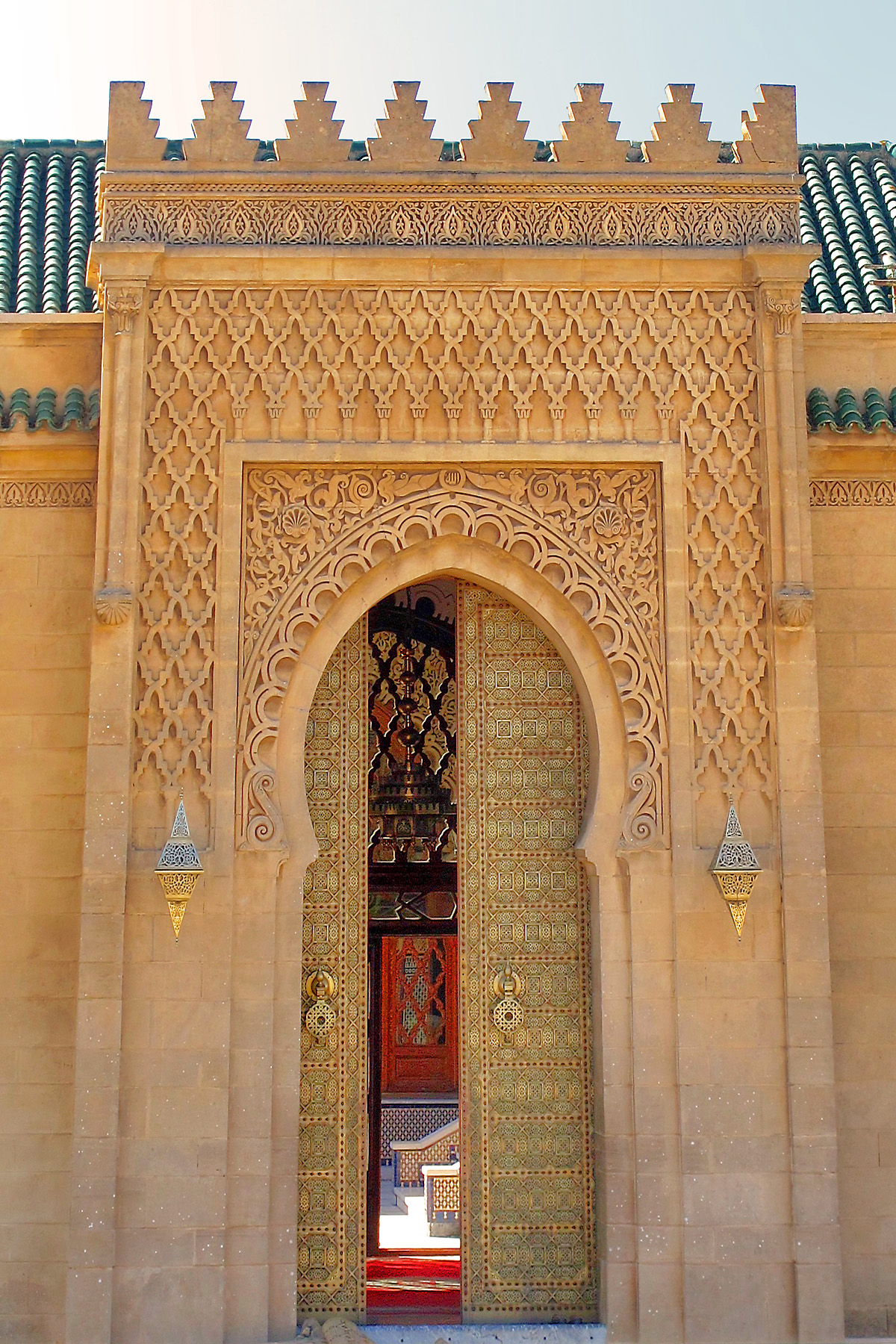
I understand how lucky I am to be heading off again, and know when I’m finally on my way how much I’ll enjoy almost all of it…except for…repeat…any of the above. A peek through the door reminds me of past adventures well worth every panic attack, once I step into new space. I’m leaving now, sending “traveling mercies” to all fellow journeyers (as Anne Lamott offered to us in her wonderful book by the same title.)
A bouquet, given to a convalescing friend, made her sneeze, so she gave it to me when I visited. We laughed about how unattractive it was. The flowers were garish (why dye flowers unless they don’t have a lot going for them in the first place?), the petals were drooping and the fragrance (I’m being generous) was less than appealing. I brought them home to toss, but wondered momentarily what the camera might see that I didn’t. I was reminded, once again, of the value of a second look before judgment.


I like illusions. I like the magic of sleight of hand, the sight puzzled over, the pleasure of a surprise. I enjoy experimenting with photography software, particularly when the unexpected emerges from layering, and a new vision appears. The mystery of illusion almost always makes me smile. Facts can tell us about the mechanics behind many illusions, but not what happens in us when we experience them for ourselves.
Words work illusionary wonders too. We believe we know what a word means, but what I label a chair doesn’t look like yours. I think my word describes what you’re seeing, and yet it doesn’t, even if they have common characteristics. If it’s challenging to share the same sense of something that it’s possible to see and touch, the complications inherent in attempting to share the abstract is completely boggling. The words of a story that come alive to me through my mind’s translation don’t necessarily speak to you (which always amazes me when I have loved a book, and a good friend hasn’t.) Our lives are more interesting because of these differences in imprinting and interpretation. But it’s a wonder to me that the words we choose, the layers we apply, the regional peculiarities that exist in our exchanges and the presumption that our visions are similar, can actually produce anything between us but confusion. We live in a world of verbal illusion, sharing in the wide space that mysteriously interacts between our imaginations, mostly quite successfully. I am in awe.


 My Time Too